Spider Plants Are Pet Safe
by admin in Pet Care Basics 118 - Last Update December 5, 2025
I remember the moment of panic like it was yesterday. I walked into my living room to find my new kitten, Leo, batting at and chewing on the leaf of a houseplant I\'d just brought home. My heart dropped. I had no idea if it was poisonous. That frantic Google search was the start of my journey into the world of pet-safe plants, and it’s how I discovered my absolute favorite: the humble spider plant.
Why spider plants are a pet owner\'s best friend
For years now, spider plants (Chlorophytum comosum) have been my go-to recommendation for any friend with a furry companion. The reason is simple: they are consistently listed as non-toxic to both cats and dogs by major animal wellness organizations like the ASPCA. For me, that peace of mind is everything. It means I can bring greenery into my home without creating a hidden danger zone for my pets. They\'re also incredibly resilient, which is a bonus for someone like me who doesn\'t have the greenest thumb!
What does non-toxic actually mean?
When we say a plant is non-toxic, it means that ingestion is not expected to cause serious illness or death. With spider plants, even if my curious dog decides to nibble on a leaf, I don\'t have to rush to the emergency vet. This is a stark contrast to incredibly dangerous plants like lilies, which can be fatal to cats. Knowing this distinction has been a game-changer for my confidence as a plant-loving pet parent.
A quick word of caution
While spider plants aren\'t poisonous, they\'re not exactly a salad for your pet. If your cat or dog eats a large quantity of the leaves, it can lead to some mild digestive upset. I\'ve seen this once with my own cat – a bit of vomiting and an unhappy tummy for a few hours. It was a good reminder that even safe things should be enjoyed in moderation. Spider plant leaves contain chemical compounds that are mildly hallucinogenic to cats, which is part of why they find them so attractive. It\'s not harmful, but it does explain their obsession!
How i keep my pets from overindulging
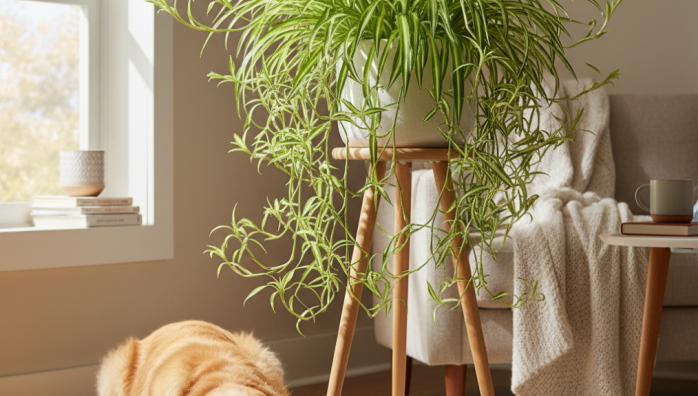
Over the years, I\'ve learned a simple trick. The long, dangling leaves are almost like a built-in cat toy. To minimize temptation, I use hanging baskets or place my spider plants on high shelves. My pets can\'t easily reach them, the plants get great light, and I get to enjoy their air-purifying benefits without worrying about a leafy snack-cident. Of course, this is just my personal experience, and I always think it\'s wise to have a quick chat with your vet if you\'re introducing any new plant into your pet\'s environment.