Identifying Pet Safe Houseplants
by admin in Pet Care Basics 170 - Last Update December 6, 2025
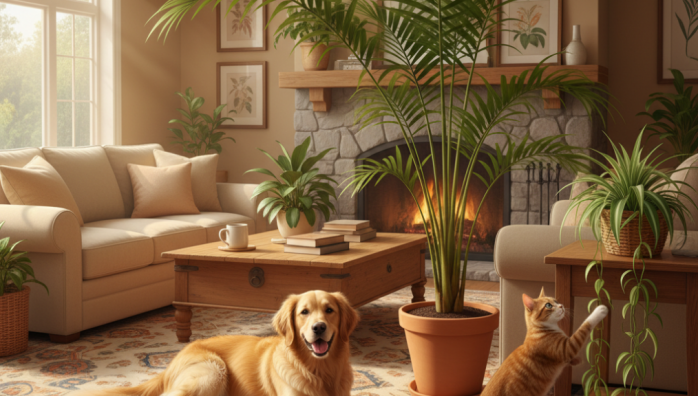
I\'ll never forget the moment I walked into my living room to see my new kitten, Leo, batting at and then chewing on the leaf of a plant I\'d just been gifted. My heart sank. I had no idea what the plant was, or if it was toxic. That scare sent me down a rabbit hole, and honestly, it completely changed how I approach bringing greenery into my home. It\'s not just about decor anymore; it\'s about creating a true sanctuary for every member of my family, furry ones included.
Why choosing pet-safe plants is about peace of mind
For years, I just bought what looked pretty at the garden center. I now realize that curating a collection of pet-safe houseplants isn\'t a restriction, it\'s a freedom. It’s the freedom to not have a mini-panic attack every time my dog sniffs a little too close to a planter. It\'s knowing that even if my cat\'s curiosity gets the better of her, the worst outcome is a nibbled leaf and not an emergency trip to the vet. This shift in perspective has made my home feel so much more relaxed and safe.
My personal list of beautiful and non-toxic favorites
Over time, I\'ve found some truly stunning plants that are completely safe for my inquisitive pets. These are my tried-and-true go-to\'s that are both beautiful and worry-free:
- Spider Plant (Chlorophytum comosum): This is a classic for a reason. It\'s resilient, a fantastic air purifier, and my cats are endlessly entertained by the little \'spiderettes\' that hang down.
- Parlor Palm (Chamaedorea elegans): If you want a tropical vibe without the risk, this is it. It\'s been a statement piece in my living room for years and has been completely ignored by my pets.
- Calathea (Prayer Plant): I\'m fascinated by these. Their leaves move up and down with the daily light cycle. They require a bit more attention to humidity, but their gorgeous foliage is worth it and perfectly safe.
- Boston Fern (Nephrolepis exaltata): A lush, feathery fern adds so much life to a room. I have one in a hanging basket, well out of the way but safe even if a frond falls to the floor.
Plants i learned to keep out of my home
My journey wasn\'t without mistakes. I once brought home a gorgeous Pothos, with its cascading vines, only to learn it could cause oral irritation and vomiting if ingested. It taught me a valuable lesson: always check before you buy. Some of the most common but surprisingly toxic plants I now avoid are Lilies (especially for cats, they are extremely dangerous), Sago Palms, and Dieffenbachia (Dumb Cane).
A final tip for plant shopping
My best advice is to use a trusted resource. Before I even put a plant in my cart, I pull out my phone and look up its name on the ASPCA\'s plant list. It\'s a quick, simple step that has saved me from potential heartache more than once. While the plants I\'ve shared have been safe in my home, it\'s always wise to chat with your vet if you have any specific concerns about your pet\'s health or habits. Creating a beautiful, green, and safe home is one of the best things we can do for our animal companions.