Pet-Safe Houseplants for Your Home
by admin in Pet Care Basics 94 - Last Update December 4, 2025
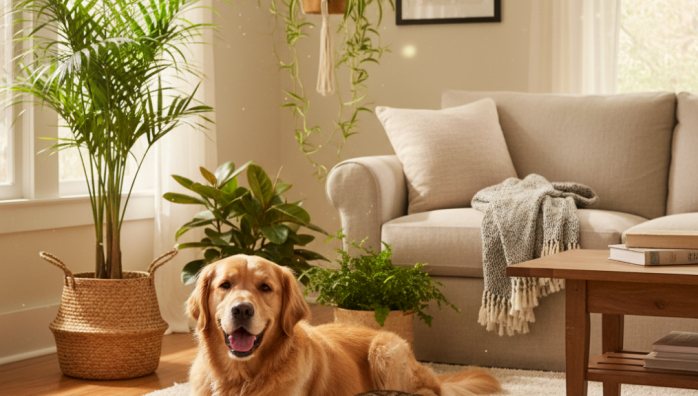
I\'ll never forget the panic I felt when I walked into my living room to find my new kitten, Leo, batting at and chewing on a leaf from a beautiful Dieffenbachia I’d just bought. My heart dropped. I knew some plants were toxic, but in my excitement to decorate, I\'d completely forgotten to check. After a frantic call to the vet (Leo was fine, thankfully!), I completely re-evaluated how I approached being both a plant lover and a pet parent. It took some research and a bit of trial and error, but I\'ve learned that you absolutely don\'t have to choose between a lush, green home and the safety of your furry family members.
Why choosing pet-safe plants is a non-negotiable for me
That little scare with Leo was a huge wake-up call. Many of the most popular houseplants, like lilies, sago palms, and even tulips, can be incredibly dangerous for cats and dogs, causing everything from mild stomach upset to severe organ failure. I realized that my pets\' curiosity is unpredictable. Even my older, calmer dog might decide a new leaf looks like a fun chew toy. For me, creating a safe environment means eliminating those risks entirely. It\'s just not worth the worry.
My go-to list of beautiful and safe houseplants
Over the years, I\'ve curated a collection of plants that are both beautiful and completely non-toxic. These are the tried-and-true green friends that thrive in my home without ever causing me a moment of anxiety.
The resilient spider plant (Chlorophytum comosum)
This is probably the first pet-safe plant I ever bought. It\'s incredibly forgiving and produces little \'spiderettes\' that are easy to propagate. My cats find the long, dangly leaves fascinating, but since it\'s non-toxic, I don\'t worry when they occasionally bat at one. It\'s perfect in a hanging basket, well out of reach but still safe if a leaf falls.
The lush boston fern (Nephrolepis exaltata)
I love the classic, feathery look of a Boston Fern. They bring a bit of woodland magic indoors. They do like humidity, so I keep mine in the bathroom, where my pets rarely bother it. It\'s a gorgeous, safe way to add a big splash of green to a room.
The striking prayer plant (Calathea)
The patterns on Calathea leaves are just stunning. What I find so fascinating is how their leaves fold up at night, like hands in prayer. They\'re a bit more demanding with their watering schedule, but their beauty is well worth it, and I have peace of mind knowing they pose no threat to my inquisitive pets.
The hardy parlor palm (Chamaedorea elegans)
If you want a tropical vibe without the risk, the Parlor Palm is a fantastic choice. It\'s a slow grower and does well in lower light conditions, which is a huge plus for some of the shadier corners of my house. It\'s elegant, low-maintenance, and completely safe for all my four-legged companions.
A quick note on \'non-toxic\' versus \'indigestible\'
Here\'s something important I\'ve learned: \'non-toxic\' doesn\'t mean \'edible\'. Even safe plants can cause a mild stomach upset, like vomiting or diarrhea, if your pet decides to eat a large quantity of leaves. The plant matter itself can just be difficult to digest. I always keep an eye out, and if one of my pets seems a little too interested in a plant, I move it. As always, if you\'re ever concerned about something your pet has ingested, a quick call to your vet is the best course of action.
Ultimately, creating a home that\'s a sanctuary for both you and your pets is all about mindful choices. By filling my space with plants that I know are safe, I can relax and enjoy the beauty of nature indoors without a single worry. It\'s a win-win for everyone in the family, paws and all.