Sourcing Safe Ingredients for Beginner Raw Feeders
by admin in Pet Care Basics 123 - Last Update November 26, 2025
When I first decided to transition my dog, Buster, to a raw diet, I felt a mix of excitement and pure terror. The concept made sense, but the responsibility of sourcing every single ingredient felt overwhelming. I’d stand in the grocery store, paralyzed with indecision, wondering if what I was buying was truly safe. It took me a lot of research, a few mistakes, and many conversations with my vet and a trusted local butcher to build the confidence I have today. I want to share what I\'ve learned to help make your journey a little less daunting.
The heart of the meal: sourcing quality meat
The foundation of any BARF (Biologically Appropriate Raw Food) diet is high-quality muscle meat. This is where the bulk of the protein comes from, and its quality directly impacts your pet\'s health. Honestly, this was my biggest worry. Was supermarket meat good enough? Could I trust an online supplier?
Finding a supplier you can trust
After some trial and error, I found the most peace of mind by building a relationship with a local butcher. I explained I was buying for my dog, and they were incredibly helpful. I learned to ask specific questions: Is this human-grade? Where do you source your animals from? Is it grass-fed? A good butcher can also provide off-cuts, fat trimmings, and other parts that are perfect for pet meals but less popular for human consumption, often at a better price. If you don\'t have a local butcher, look for online raw feeding suppliers with transparent sourcing practices and positive reviews from the community.
Starting simple is key
I made the mistake of trying to create a perfectly balanced, multi-protein meal from day one. This just led to stress. My vet suggested I start with a single, easily digestible protein like chicken or turkey to see how Buster\'s system would react. Once he was doing well, I slowly introduced other proteins like beef and lamb. Variety is crucial in the long run for a balanced nutrient profile, but you don\'t need to do it all at once.
More than muscle: bones, organs, and the essentials
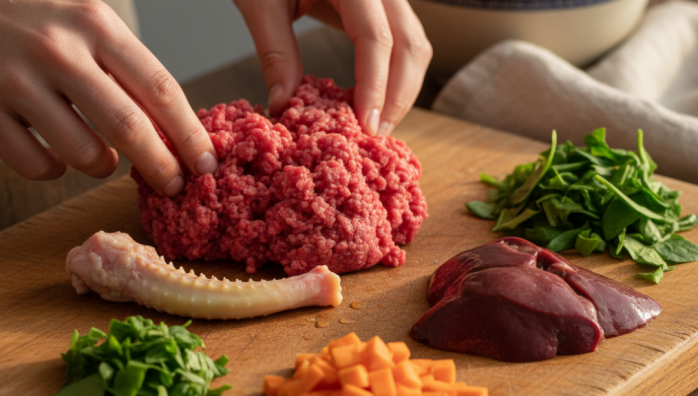
A raw diet isn\'t just steak. The real nutritional powerhouses are the raw meaty bones (RMBs) and organ meats. These components provide essential calcium, phosphorus, and a dense concentration of vitamins and minerals that you just can\'t get from muscle meat alone.
The deal with raw meaty bones
Introducing bones was another source of anxiety for me. I had all the common fears about choking or splintering. The key I learned is sourcing the *right kind* of bones. They must always be raw (cooked bones are brittle and dangerous) and appropriately sized for your pet. For Buster, a medium-sized dog, I started with chicken necks and wings. They\'re soft, pliable, and a great source of calcium and dental health benefits. My butcher now sets them aside for me regularly.
Why organ meats are non-negotiable
Organ meats like liver, kidney, and heart are the multi-vitamins of the raw feeding world. They should only make up a small percentage of the overall diet (around 5-10%), but they are incredibly nutrient-dense. I source these from the same butcher as my other meats to ensure they come from healthy animals. A word of caution I learned the hard way: introduce organs very slowly. They are incredibly rich and can cause digestive upset if you add too much, too soon.
Finishing touches: produce and supplements
The final components are the fruits, vegetables, and any necessary supplements. I purée a small amount of pet-safe veggies like kale, carrots, and pumpkin for fiber and antioxidants. For supplements, I focus on a high-quality Omega-3 oil to balance the fats. However, this is one area where I strongly believe in professional guidance. What worked for my dog might not be right for yours, so I always recommend having a chat with your veterinarian or a certified pet nutritionist to tailor the diet perfectly for your pet\'s individual needs.