Safe Transitioning to BARF Dog Diet
by admin in Pet Care Basics 217 - Last Update December 3, 2025
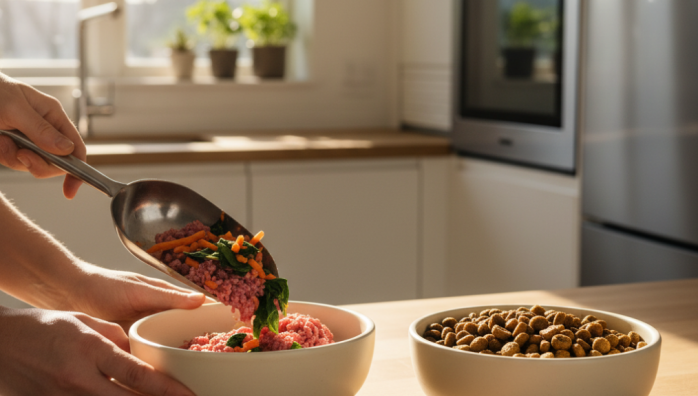
When I first heard about the BARF (Biologically Appropriate Raw Food) diet, I was intrigued but also incredibly nervous. The idea of feeding my dog raw meat felt so foreign compared to scooping kibble. Honestly, my biggest fear was making him sick. After weeks of research and talking with other long-time raw feeders, I finally decided to take the plunge, but I knew the transition had to be slow and careful. It was one of the best decisions I ever made for his health, but getting there safely was the most important part.
Why a slow transition is non-negotiable
A dog\'s digestive system gets used to its current food. Think of their gut bacteria as a finely-tuned ecosystem built around digesting kibble. Suddenly switching to a completely different food source, especially raw meat, can shock that system. I\'ve seen friends try to switch overnight, and it almost always resulted in digestive upset—diarrhea, vomiting, and a very unhappy dog. The goal isn\'t just to change their food; it\'s to give their body time to adapt and thrive on the new diet. It\'s an exercise in patience that pays off immensely.
My step-by-step plan for a gentle switch
I learned early on that the key is to go at your dog\'s pace. The \'slow swap\' method worked wonders for us. Before you begin, I highly recommend starting with a single, easily digestible protein like chicken or turkey. This helps you isolate any potential sensitivities before you start adding variety. This is the schedule I followed, but remember to watch your dog and adjust as needed.
- Week 1: The introduction. I started by replacing just 25% of his usual kibble with the new raw food. So, his bowl would have 75% kibble and 25% raw. I mixed it in well and watched him like a hawk after every meal.
- Week 2: Going halfsies. Since he handled the first week well (his stools were firm and he had no tummy rumbles), I moved to a 50/50 split. Half his old food, half his new raw food. This is often where you\'ll first notice positive changes, like a bit more energy.
- Week 3: The home stretch. With things still going smoothly, I tipped the scales to 75% raw food and just 25% kibble. By this point, his system was clearly adjusting well.
- Week 4: Full transition. Finally, we went to 100% raw. It felt like a huge milestone! I kept him on that single protein for another couple of weeks before slowly starting to introduce other meats one at a time.
What to watch for (the good and the bad)
During the entire process, your dog\'s poop is your best source of information. I know it\'s not glamorous, but you\'re looking for firm, well-formed stools. A little softness can be normal as their system adjusts, but persistent diarrhea is a sign to slow down. If I saw loose stools for more than a day, I\'d drop back to the previous week\'s ratio for a few extra days before trying to move forward again. On the good side, look for increased energy, a shinier coat, and cleaner teeth over time. These benefits are what make the careful transition so worthwhile.
A note on food safety
This is crucial. I treat my dog\'s raw food preparation with the same care as my own. I use separate cutting boards, wash bowls with hot, soapy water after every meal, and always wash my hands thoroughly before and after handling the meat. Safe handling practices are essential for protecting both your dog and your family.
My final thoughts
Transitioning to a BARF diet was a journey, not a race. It took patience and careful observation, but seeing the positive impact on my dog\'s well-being was all the reward I needed. Remember, this is just what worked for my dog, and every pup is an individual. I can\'t stress enough how important it is to discuss any major dietary changes with your veterinarian first. They know your dog\'s health history and can provide the best guidance for your specific situation.