Balancing Nutrients in Homemade Raw Meals
by admin in Pet Care Basics 180 - Last Update November 30, 2025
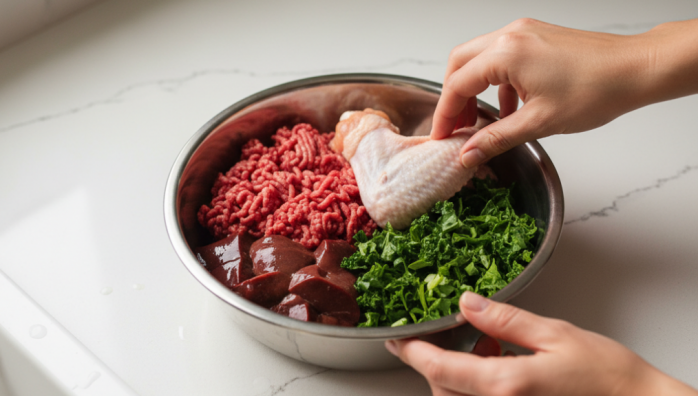
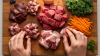
When I first decided to switch my dog to a homemade raw diet, I felt a mix of excitement and pure terror. I’d stand in my kitchen, surrounded by different cuts of meat, organs, and bones, and a wave of doubt would wash over me. Was I getting this right? Could I actually provide a complete, balanced meal? Honestly, it was overwhelming, and my first few attempts were clumsy at best. But I stuck with it, and through a lot of research and careful observation, I finally found a rhythm and confidence that I want to share with you.
The foundational principles i finally understood
The biggest \'aha\' moment for me was realizing that balance doesn\'t have to be achieved in every single meal. Just like with our own diets, it\'s about balance over time—over the course of a week or so. This simple shift in perspective took so much pressure off. I learned to think in terms of core components, each with a vital role to play.
Muscle meat: the cornerstone
This should be the bulk of the diet. It provides essential proteins, amino acids, and some fats. I learned quickly that variety is crucial. I rotate between beef, chicken, turkey, and lamb to provide a wider range of nutrients. Just feeding one type of protein, like chicken, can lead to deficiencies or even allergies down the line. This was my first big mistake, and I saw a real improvement in my dog\'s coat once I started rotating proteins.
Raw meaty bones: for calcium and so much more
This part scared me the most initially. But raw meaty bones (RMBs) are soft, pliable, and a critical source of natural calcium and phosphorus. They\'re also incredible for dental health. I started with things like chicken wings and necks, which are great for beginners. The key is that they must be *raw*—cooked bones are brittle and dangerous. I aim for RMBs to be about 10-12% of the total diet.
Organs: the nutrient powerhouses
If muscle meat is the foundation, organs are the multivitamins. Liver, in particular, is rich in Vitamin A, but you have to be careful not to overdo it. A good rule of thumb I follow is that about 10% of the diet should be organs, with half of that (5%) being liver, and the other half a mix of other secreting organs like kidney, spleen, or pancreas.
Putting it all together: the 80/10/10 rule as a starting point
You\'ll often hear about the 80/10/10 guideline: 80% muscle meat, 10% raw meaty bone, and 10% organ. This is an excellent starting point, but it\'s not a rigid law. I found it was a fantastic framework to build upon. Some dogs might need slightly more or less bone depending on their stool consistency, for example. That\'s where observation becomes your most powerful tool.
My biggest lesson: watch your pet
Ultimately, your pet is the best guide. A shiny coat, healthy skin, consistent energy levels, and firm, small stools are all signs you\'re on the right track. I learned to be a keen observer, and that told me more than any chart ever could. Transitioning to raw feeding was a journey, but seeing the vibrant health of my companion has made every moment of uncertainty worth it. I always suggest starting slow and, most importantly, having a conversation with a holistic or pro-raw veterinarian to ensure you\'re meeting your pet\'s specific needs. It\'s what gave me the final piece of confidence I needed.