Preparing Balanced Raw Meals for Beginners
by admin in Pet Care Basics 174 - Last Update November 29, 2025
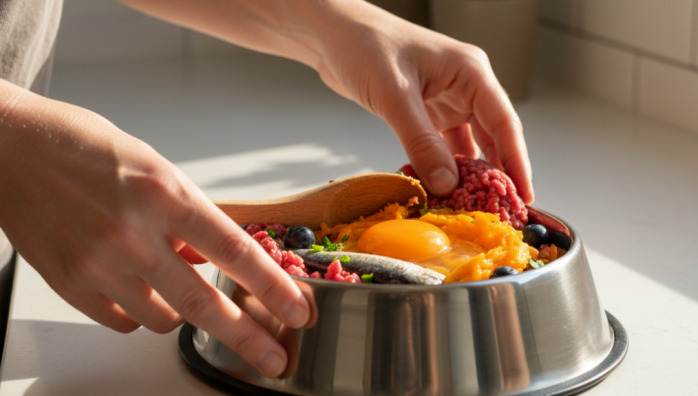
When I first considered switching my dog to a raw diet, I was completely overwhelmed. The internet was a storm of conflicting information, and the fear of doing it wrong was paralyzing. I spent weeks just reading, feeling like I needed a degree in veterinary nutrition to even start. But honestly, once I broke it down into simple, manageable steps, it became not only achievable but also one of the most rewarding things I\'ve done for my pet\'s health. I want to share the straightforward approach that finally clicked for me.
Understanding the core principles of a balanced raw diet
The goal of a raw diet, specifically the BARF (Biologically Appropriate Raw Food) model, is to mimic what a canine or feline would eat in the wild. This isn\'t about just throwing a steak in a bowl; it\'s about balance. The key is to provide a variety of nutrients from different parts of an animal over time. I stopped trying to make every single meal perfectly balanced and instead started thinking about balancing over the course of a week. This shift in mindset was a game-changer and took so much pressure off.
The 80/10/5/5 rule: my starting point
This simple ratio is the foundation of most prey-model or BARF diets, and it\'s what I used to build my confidence. It\'s a guideline, not a rigid law, but it\'s the perfect starting point for beginners. Here\'s the breakdown:
- 80% Muscle Meat: This includes heart, lung, gizzards, and green tripe. It\'s the primary source of protein, amino acids, and B vitamins.
- 10% Raw Edible Bone: This is non-negotiable for calcium and phosphorus. It\'s crucial for bone health and firm stools. Never, ever feed cooked bones.
- 5% Liver: This is a nutritional powerhouse, packed with Vitamin A, D, and iron. It\'s very rich, so you must stick to the 5% ratio to avoid loose stools. I made that mistake early on!
- 5% Other Secreting Organs: Think kidney, spleen, pancreas, or brains. These provide a different range of essential vitamins and minerals that liver alone doesn\'t cover.
Building your first raw meal step-by-step
I started with a very simple protein to make sure my dog\'s system could handle the switch. Chicken is often recommended because it\'s readily available and the bones are soft and easy for beginners to work with.
1. Choose your protein base (80%)
I started with basic chicken thighs (with the bone in, which I\'ll get to) and some beef heart from a local butcher to make up the bulk of the meal. The heart is technically a muscle, and it\'s fantastic for taurine, which is vital for heart health.
2. Add the essential organs (10%)
For a 1lb (450g) batch of food, this meant adding about 0.8oz (22g) of chicken liver and 0.8oz (22g) of beef kidney. I bought a small batch of organs, diced them up, and froze them in ice cube trays. This made portioning so much easier in the beginning.
3. Get the bone content right (10%)
This was the scariest part for me. I started with chicken necks and wings, as they are soft, fully edible, and a great source of calcium. I\'d weigh the entire meal to ensure the bone-in items made up roughly 10% of the total weight. For example, a chicken wing is about 40-50% bone, so you have to account for that when calculating your ratios.
Common pitfalls I learned to avoid
I definitely made some mistakes along the way. Here are a few things I wish I\'d known sooner:
- Lack of variety: Sticking to just chicken for months on end can lead to deficiencies. Once I knew my dog was handling it well, I slowly introduced other proteins like turkey, beef, and lamb. The goal is to rotate at least 3-4 different proteins.
- Forgetting supplements: Most farmed meat is lower in Omega-3s than wild prey. I now add a good quality fish or sardine oil to the bowl a few times a week.
- Going too fast: I introduced new ingredients one at a time over several days to watch for any digestive upset. This slow transition is key.
Embarking on this raw feeding journey has been an incredible experience, and I\'ve seen such a positive change in my dog\'s energy and coat. However, every pet is unique. This is what worked for us, but I always recommend chatting with your veterinarian or a qualified animal nutritionist to ensure you\'re creating a plan that is safe and truly balanced for your furry family member.