Balancing Essential Nutrients in Raw Pet Meals
by admin in Pet Care Basics 130 - Last Update November 28, 2025
When I first switched my dog to a raw diet, I was overwhelmed. I\'d read all about the benefits—the shiny coat, the clean teeth, the boundless energy—but staring at a pile of meat and bones, my biggest fear was getting the nutrition wrong. I spent weeks worrying I was missing some vital nutrient. It honestly took me a while to understand that balancing a raw meal isn\'t about hitting precise targets every single day, but about providing a complete spectrum of nutrients over the course of a week.
The core foundation of a BARF diet
I learned to think of a raw meal in terms of fundamental building blocks. The most popular model, and the one I started with, is often called the BARF (Biologically Appropriate Raw Food) or Prey Model. It simplifies the process into a few key categories, which took so much of the guesswork out of it for me.
Muscle meat: The protein engine
This is the bulk of the diet, typically making up around 70-80% of the meal. This isn\'t just about steak; it includes heart (which is a fantastic muscle meat), gizzards, tongue, and lung. I rotate proteins constantly—beef, chicken, turkey, lamb—to ensure a wide array of amino acids. I found that sticking to one protein source was an early mistake that limited the nutrient profile.
Raw edible bones: The calcium cornerstone
This was the scariest part for me at first, but it\'s non-negotiable. Raw bones provide essential calcium, phosphorus, and other minerals in their most natural form. They should make up about 10% of the diet. I stick to soft, pliable bones like chicken wings, necks, or feet. The key is that they must be raw; cooked bones are brittle and dangerous. Watching my dog happily crunch on a chicken wing and knowing it was cleaning his teeth and providing vital minerals was a huge \'aha\' moment for me.
Organ meats: The nutrient powerhouses
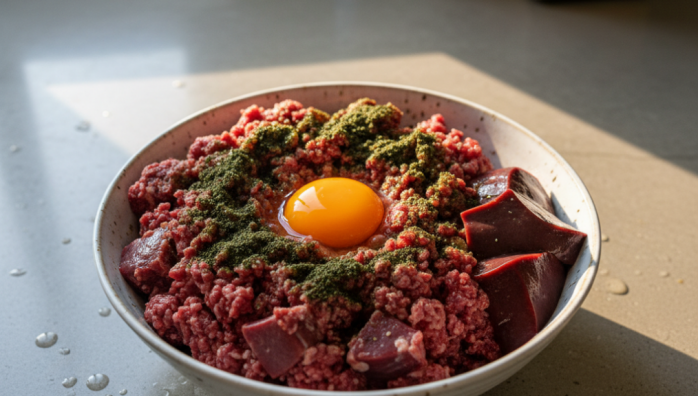
If muscle meat is the engine, organs are the high-octane fuel. They should be about 10% of the diet, but this part is critical. Half of that (5% of the total diet) should be liver, which is packed with Vitamin A. The other 5% should be another secreting organ, like kidney, spleen, or pancreas. I learned the hard way that too much liver too soon can cause loose stools, so I introduced it very slowly.
Going beyond the basics for a truly balanced bowl
Once I mastered the basic ratios, I started focusing on the micronutrients that truly make a diet thrive. This is where I feel I went from just feeding raw to crafting a truly nourishing meal plan.
Essential fatty acids, particularly Omega-3s, are crucial for reducing inflammation and supporting skin, coat, and joint health. I add these by including oily fish like sardines or salmon a few times a week, or by supplementing with a high-quality fish or krill oil. I also add a whole raw egg a few times a week for its fantastic blend of vitamins and minerals. For trace minerals and iodine, a sprinkle of kelp powder is an easy addition I swear by.
My final checklist for peace of mind
After all the research and a few years of experience, my anxiety is gone. I now follow a simple mental checklist that ensures I\'m hitting all the marks over a week\'s time. It\'s not about perfection in every single bowl, but balance over time. My general guide looks something like this:
- About 80% muscle meat (including heart)
- About 10% raw edible bone
- About 5% liver
- About 5% other secreting organ (like kidney)
- A source of Omega-3s (oily fish or oil)
- Occasional extras like raw eggs or green-lipped mussels
This journey has been incredibly rewarding. Seeing my pets thrive is the best proof I could ask for. However, every pet is an individual. This is what has worked for my animals, but I always recommend chatting with a holistic vet or a certified canine nutritionist to tailor a plan that\'s perfect for your companion\'s specific needs.