Safe Protein Sources for Beginner Raw Feeders
by admin in Pet Care Basics 116 - Last Update December 2, 2025
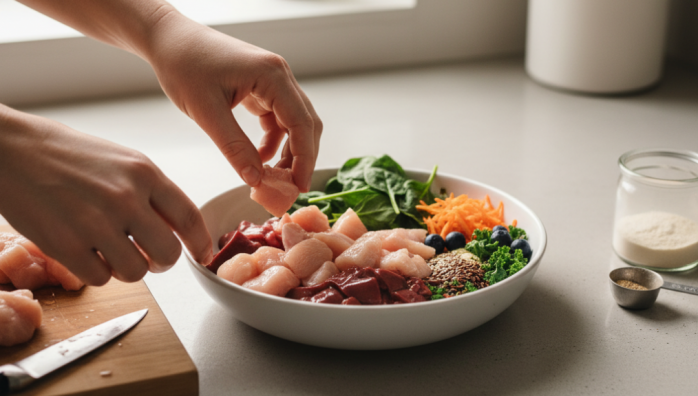
When I first decided to transition my dog to a raw diet, I remember standing in the meat aisle of the grocery store feeling completely overwhelmed. The sheer number of choices was paralyzing. I was so worried I’d pick the wrong thing and upset his stomach, or worse. It took a lot of research and some trial and error, but I eventually learned that the key to starting a BARF diet is simplicity. You don\'t need to create a perfectly balanced, multi-protein gourmet meal on day one.
Why starting simple is the golden rule
Honestly, my biggest \'aha\' moment was realizing I needed to introduce new proteins one at a time. This approach, often called a \'mono-protein\' start, allows you to easily identify any potential allergies or sensitivities. If your dog gets an upset stomach or itchy skin, you know exactly which food is the likely culprit. It takes the guesswork out of the equation and makes the entire process so much less stressful for both of you. I started with one single protein for two full weeks before I even thought about adding something new.
The best \'starter\' proteins I recommend
Based on my experience and conversations with other raw feeders, a few proteins consistently stand out as being gentle, affordable, and readily available. These are the ones I always suggest for beginners.
- Chicken: This is the classic starting point for a reason. It\'s lean, inexpensive, and most pets tolerate it well. When I started, I used skinless chicken breast to keep the fat content low, which is easier on a digestive system that\'s still adapting. Just be mindful of sourcing good quality, human-grade chicken.
- Turkey: Very similar to chicken, turkey is another fantastic lean poultry option. It’s great for pets who might have a slight sensitivity to chicken, and it offers a slightly different nutrient profile. My cat, for example, took to ground turkey much faster than she did to chicken.
- Beef: A wonderful red meat option that\'s rich in iron. However, it can be a bit richer than poultry. I\'d suggest starting with a leaner cut, like 90/10 ground beef, and introducing it in small amounts. This is a great protein to move to after you\'ve had success with chicken or turkey.
Proteins to introduce after the transition period
Once your pet is happily eating their starter protein and their digestion is solid for a few weeks, you can start thinking about rotation. Variety is crucial for a balanced raw diet in the long run. These are some of the proteins I introduced later on.
- Lamb: This was a game-changer for a friend\'s dog who had poultry allergies. It\'s a bit fattier, so I introduced it slowly, but it\'s an excellent option for many dogs.
- Duck: Often considered a \'novel\' protein, duck is fantastic for pets with common allergies. It\'s also a richer meat, so it’s perfect for active dogs once they are accustomed to a raw diet.
- Oily Fish (like Sardines): I don\'t use fish as a primary meal, but I add a couple of sardines packed in water to my dog\'s bowl once or twice a week for a huge omega-3 boost. It\'s fantastic for skin and coat health. Just be sure they are boneless and have no added salt.
A final thought on the journey
Remember, this is about progress, not perfection. The goal is to build a varied, nutrient-dense diet over time. Don\'t feel pressured to introduce everything at once. Listen to your pet, observe their reactions, and go at their pace. And while I\'m sharing what worked for my animals, I always recommend having a conversation with your veterinarian or a certified pet nutritionist to ensure the plan is right for your specific pet\'s needs.