Safe Nail Trimming for Dogs and Cats
by admin in Pet Care Basics 210 - Last Update November 27, 2025
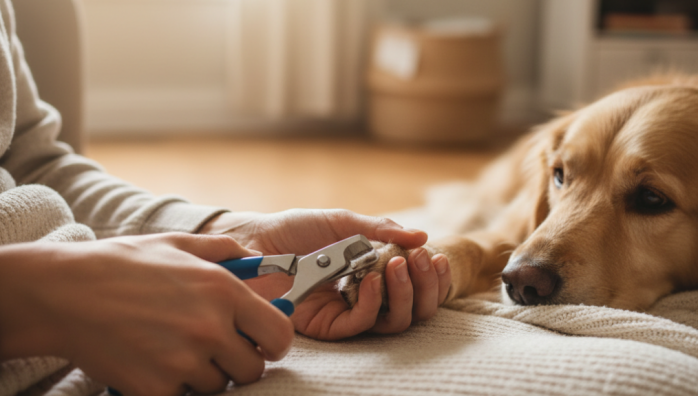
I still remember the first time I tried to trim my rescue dog\'s nails. It was a disaster. He was terrified, I was terrified, and the clippers went flying across the room. For years, I outsourced the task to vets or groomers, feeling like a failure. It wasn\'t until I adopted a very anxious cat that I realized I had to master this skill at home. It took patience and a lot of trial and error, but I\'ve learned that nail trimming doesn\'t have to be a battle. It can be a calm, bonding experience.
Choosing the right tools for the job
The wall of nail clippers at the pet store can be overwhelming. Honestly, the \'best\' tool is the one you feel most comfortable and confident using. I\'ve tried them all. Guillotine-style clippers are great for cats and small dogs, but I found them less effective on my larger dog\'s thick nails. For him, I prefer the scissor-style or plier-style clippers; they give me more control and a cleaner cut. I also invested in a nail grinder, which I use after clipping to smooth any rough edges. It’s a game-changer for preventing snags on carpets and furniture.
Preparing your pet (and yourself)
The most important lesson I learned is that my pets feed off my energy. If I\'m anxious, they\'ll be anxious. So, I always start by taking a few deep breaths. I choose a quiet time when the house is calm, not when the kids are running around. I get my tools, some high-value treats, and a special lick mat with a bit of xylitol-free peanut butter or pet-safe pate ready. The goal is to make them associate nail care with something wonderful. We started slow, with me just handling their paws for a second and then giving a treat. We built up from there over several days.
The step-by-step trimming process
Once everyone is relaxed, I follow a simple routine. It\'s not about getting all the nails done in one go; sometimes we just do one paw and finish the rest later.
- Get comfortable: I sit on the floor with my pet, not looming over them. For my cat, I let her settle in my lap. My dog is happy to lie beside me.
- Hold the paw gently: I hold the paw firmly but gently, with my thumb on the pad and my forefinger on the top of the toe. I gently press to extend the nail.
- Identify the quick: This was my biggest fear. The quick is the pink part inside the nail with blood vessels and nerves. On light-colored nails, it\'s easy to see. On dark nails, it\'s much harder. I learned to look for a small, dark circle in the center of the cut nail surface; when you see it, stop. My rule is to always trim tiny slivers off the end rather than one big chunk.
- Cut at a 45-degree angle: I clip just the tip of the nail, avoiding the quick. It\'s always better to take off too little than too much.
- Reward, reward, reward: After each successful clip, I praise them and offer a treat. This reinforces the positive association.
What to do if you cut the quick
It has happened to me, and it will likely happen to you at some point. Don\'t panic. Your calm reaction is key. I keep styptic powder on hand for this exact reason (cornstarch or flour can also work in a pinch). Simply apply a pinch of the powder to the nail tip with firm pressure until the bleeding stops. Give your pet lots of reassurance and a special treat, and then end the session for the day. While it\'s upsetting, it\'s usually not a major medical issue, but it\'s always a good idea to have a chat with your vet about best practices first.
A special note on cats
With cats, you typically only need to trim the very sharp, pointed tip of their front claws. Their back claws are often kept shorter through scratching and climbing. Gently squeeze the toe pad to extend the claw and snip off only the white, sharp hook. Never trim so short that you get near the pink part. This simple trim helps protect your skin and furniture without interfering with their natural need to scratch.
Patience is truly the most important tool you have. It took me weeks to get my pets comfortable with this process, but the trust we built was worth every second. You can do it too.