Safe Indoor Plants Your Pets Can Ignore
by admin in Pet Care Basics 112 - Last Update November 26, 2025
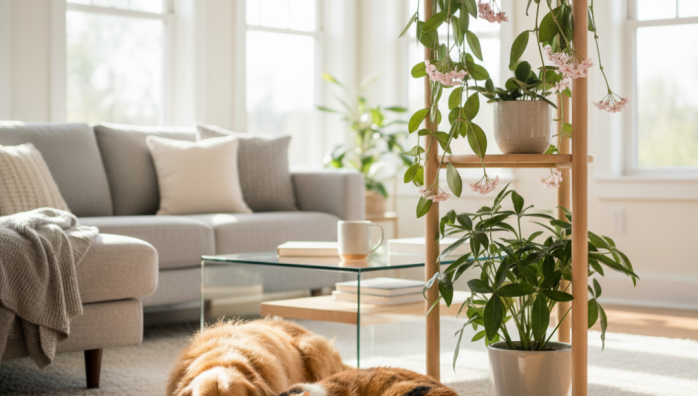
I\'ll never forget the panic I felt when I brought home a gorgeous Monstera, only to see my curious cat, Milo, immediately start batting at its leaves. A quick search sent me down a terrifying rabbit hole of plant toxicity lists. For a while, I thought I\'d have to choose between having a green home and keeping my furry family safe. It felt like an impossible choice, but after years of trial, error, and a lot of research, I\'ve learned that the secret isn\'t just finding non-toxic plants—it\'s about finding non-toxic plants that your pets find utterly boring.
The difference between \'safe\' and \'uninteresting\'
This was my big \'aha\' moment. A plant can be perfectly non-toxic, like a Spider Plant, but its long, dangly leaves can be an irresistible toy for a playful cat. While a nibble won\'t cause a trip to the emergency vet, it will destroy your plant and could still cause some mild stomach upset. My goal became finding plants that are not only safe on the off-chance of a bite, but are so unappealing in texture, shape, or smell that my pets just walk right on by. This is how I finally achieved a peaceful, green home for all of us.
My go-to list of pet-safe and pet-ignored plants
Here are the tried-and-true plants that beautify my home without ever becoming a chew toy. I\'ve had these around both my cat and my goofy Golden Retriever with great success.
- Hoyas (Wax Plant): These are my absolute favorite. Their leaves are thick, waxy, and almost feel artificial. My pets have sniffed them once and have never shown a flicker of interest since. Plus, their trailing vines are stunning.
- Cast Iron Plant (Aspidistra elatior): The name says it all. This plant is tough, and its sturdy, dark green leaves are anything but delicate or tempting. It also thrives on neglect, which, as a pet owner, is a huge bonus for me.
- Prayer Plant (Maranta leuconeura): While its leaves are a bit more delicate, they don\'t seem to attract my pets. I think the gentle, slow movement of the leaves folding at night isn\'t fast enough to trigger their prey drive. I keep mine on a slightly elevated stand just in case, and it\'s been left completely alone.
- African Violet (Saintpaulia): These little beauties add a pop of color and their fuzzy leaves don\'t seem to be very appetizing. They are compact, making them easy to place on a shelf or windowsill where a clumsy dog is less likely to knock them over.
- Peperomia Green Bean (Peperomia ferreyrae): This one is a bit more unique. Its leaves look like little green beans. The shape is odd and the texture is semi-succulent, and it has never once been bothered by my pets. It\'s a fun, quirky, and safe addition.
A final thought from my experience
Remember, every pet\'s personality is different. What my lazy cat ignores, your curious kitten might investigate. I always recommend supervising your pets for the first few days after introducing any new plant. This is just the list that has brought peace and greenery to my home, but it\'s always wise to do your own research and consult a resource like the ASPCA\'s plant list if you\'re ever unsure. A quick check is always worth the peace of mind.