Safe Houseplants for Your Curious Cat
by admin in Pet Care Basics 118 - Last Update November 28, 2025
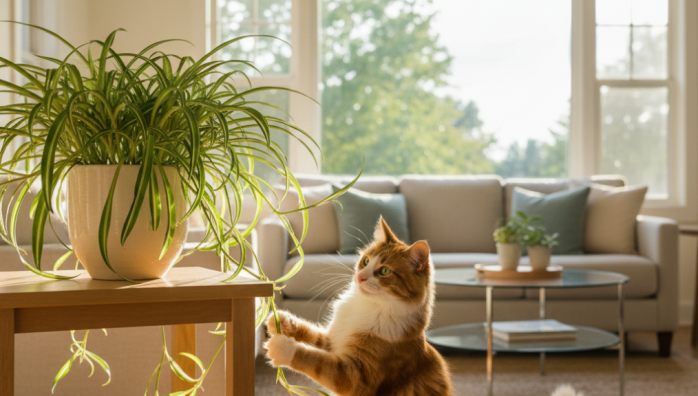
I\'ll never forget the heart-stopping moment I saw my new kitten, Leo, batting at the leaves of a beautiful Dieffenbachia I’d just brought home. I had no idea it was toxic. That scare sent me down a rabbit hole of research, and honestly, it changed the way I think about decorating my home. It\'s not just about what looks good; it\'s about creating a truly safe sanctuary for our furry family members. Over the years, I\'ve learned that you don\'t have to sacrifice a lush, green home for your cat\'s safety—you just need to be smart about your choices.
Why choosing cat-safe plants is non-negotiable
For our cats, the world is a giant playground, and a dangling leaf is an irresistible toy. They explore with their mouths, and they can\'t distinguish between a safe snack and a dangerous poison. Many common houseplants contain compounds like insoluble calcium oxalates, which can cause intense oral irritation, drooling, and vomiting. Others are far more sinister, leading to organ failure. For me, the peace of mind knowing that a curious nibble won\'t result in an emergency vet visit is absolutely priceless.
My tried-and-true list of non-toxic houseplants
After years of trial and error (and a lot of cross-referencing with the ASPCA\'s official list), I\'ve curated a collection of plants that are not only stunning but have also passed the \'Leo test.\' They are completely safe, even for the most inquisitive felines. Here are a few of my absolute favorites.
The spider plant (Chlorophytum comosum)
This is the ultimate starter plant for a cat owner. Not only is it famously easy to care for, but cats are often fascinated by its long, dangly \'spiderettes.\' Leo loves to bat at them. They\'re non-toxic and have a mildly hallucinogenic (but harmless) effect on some cats, similar to catnip, which might explain their fascination. It\'s a plant that doubles as an enrichment toy!
The prayer plant (Maranta leuconeura)
I adore the stunning patterns on the leaves of the Prayer Plant. The way its leaves fold up at night, as if in prayer, is just beautiful to watch. It\'s completely safe for cats and adds a pop of intricate color to any room. It does like a bit more humidity, so I keep mine in the bathroom, where my cats tend to leave it alone anyway.
The parlor palm (Chamaedorea elegans)
If you want a tropical vibe without the worry, the Parlor Palm is your answer. It\'s a slow-grower but gives you that lush, leafy feel. I have one in my living room corner, and while my cats sometimes nap under its fronds, they\'ve never shown much interest in chewing it. It’s a graceful, elegant, and perfectly safe choice.
The cast iron plant (Aspidistra elatior)
The name says it all. This plant is nearly indestructible, which is great if you have a less-than-green thumb like I used to. It tolerates low light and infrequent watering. More importantly, it\'s completely non-toxic to cats and dogs. It’s a workhorse of a plant that I don\'t have to stress about in any way.
A quick note on what to watch for
Even with non-toxic plants, it\'s important to remember that they aren\'t meant to be a salad bar for your cat. Ingesting a large amount of any plant material can cause mild gastrointestinal upset, like vomiting or diarrhea. I always keep an eye on my cats and try to discourage excessive chewing. If your cat ever seems unwell after munching on a plant, even a \'safe\' one, it\'s always best to be cautious. This is just what has worked in my home, so I always recommend having a quick chat with your vet if you have any concerns about your specific pet\'s health and dietary needs.