Safe Houseplants for Curious Cats
by admin in Pet Care Basics 168 - Last Update December 3, 2025
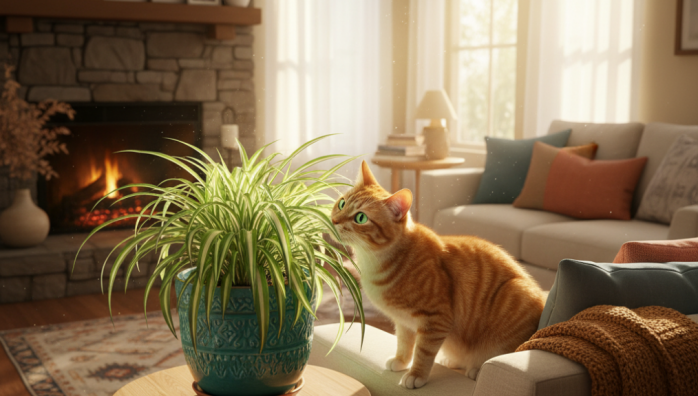
I\'ll never forget the panic I felt when I brought home a beautiful fiddle-leaf fig, only to see my new kitten, Jasper, immediately start batting at its leaves. A frantic search online revealed it was toxic to cats. The plant was gone by morning, but the fear stuck with me. For years, I thought I had to choose between having a lush, green home and ensuring my cat\'s safety. It turns out, I was wrong. You absolutely can have both.
Through a lot of research and some trial and error (with non-toxic plants, of course!), I\'ve discovered a whole world of beautiful houseplants that won\'t harm our feline friends. It\'s brought so much peace of mind, and Jasper still gets to be his curious self. Sharing this knowledge feels important, because every pet owner deserves a beautiful, safe home for their entire family, furry members included.
My go-to list of cat-safe houseplants
Here are some of the plants that have thrived in my home without ever posing a threat to my cats. I always double-check any new plant on the ASPCA\'s official list before bringing it home, and I highly recommend you do the same. It\'s my most trusted resource.
The spider plant (Chlorophytum comosum)
This is the classic starter plant for pet owners. It\'s incredibly resilient (I\'ve forgotten to water mine for weeks, and it bounces right back) and its long, dangly leaves are a magnet for playful paws. It\'s mildly hallucinogenic to cats, which sounds scary, but it\'s not harmful and often explains why they\'re so attracted to it. I keep mine in a hanging basket, which makes it a fun, high-up jungle gym for them.
The parlor palm (Chamaedorea elegans)
If you want a tropical vibe without the risk, the Parlor Palm is your answer. It\'s elegant, great for lower-light corners, and completely non-toxic. I have one in my living room, and my cats love napping under its gentle, arching fronds. It makes me feel like I have a mini-jungle, and they get a new, safe hiding spot.
The calathea family (prayer plants)
I adore Calatheas for their stunning, patterned leaves that often look hand-painted. Varieties like the Rattlesnake Plant (Calathea lancifolia) are gorgeous and perfectly safe. They can be a bit fussy about humidity, but I find that keeping them in my bathroom or near a small humidifier does the trick. Watching their leaves fold up at night, like hands in prayer, is a little moment of magic.
The ponytail palm (Beaucarnea recurvata)
Despite its name, this isn\'t a true palm at all—it\'s actually a succulent. Its bulbous trunk and long, flowing leaves are irresistible to cats who love to chew and bat. Because it\'s non-toxic, I don\'t have to worry. I placed one on a sturdy end table, and it\'s become a favorite plaything. Just be prepared for it to look a little \'loved\' over time!
A final thought on plant safety
Even with non-toxic plants, it\'s wise to keep an eye on things. A cat eating large quantities of any plant material can cause mild stomach upset. My approach is to provide plenty of other enrichment, like cat grass and engaging toys, to redirect their chewing instincts. Ultimately, creating a home where both my plants and my pets can flourish has been one of the most rewarding parts of being a pet parent.