Safe Handling of Raw Pet Food
by admin in Pet Care Basics 141 - Last Update November 28, 2025
When I first decided to transition my dog to a raw diet, my biggest fear wasn\'t about balancing nutrients or finding a good supplier. Honestly, it was about safety. I had visions of salmonella and E. coli taking over my kitchen. The thought of accidentally making my beloved pet, or even my family, sick was paralyzing. But after years of feeding raw, I\'ve learned that safe handling isn\'t complicated; it\'s just about having a consistent, common-sense routine. It’s become second nature, and I want to share the simple, non-negotiable rules I live by to give you that same peace of mind.
The foundation: my raw feeding hygiene protocol
Think of preparing your pet\'s raw meal with the same level of care you\'d use when handling raw chicken for your own dinner. The principles are identical. It all boils down to preventing cross-contamination. I established a clear protocol from day one, and it\'s made the whole process stress-free.
Step 1: The thaw and prep station
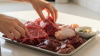
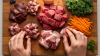
Everything starts with how you store and thaw the food. I never, ever thaw raw meat on the countertop. It\'s a breeding ground for bacteria. Instead, I move a few days\' worth of food from the freezer to the refrigerator. I place it in a sealed, leak-proof container on the bottom shelf, just in case any juices escape. For my prep area, I use a dedicated, non-porous cutting board (stainless steel or a specific color-coded plastic one) that is *only* for my pet\'s food. All the tools I use—knives, spoons, scales—are also dedicated to this purpose. It completely removes the risk of mixing things up.
Step 2: During preparation and feeding
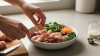
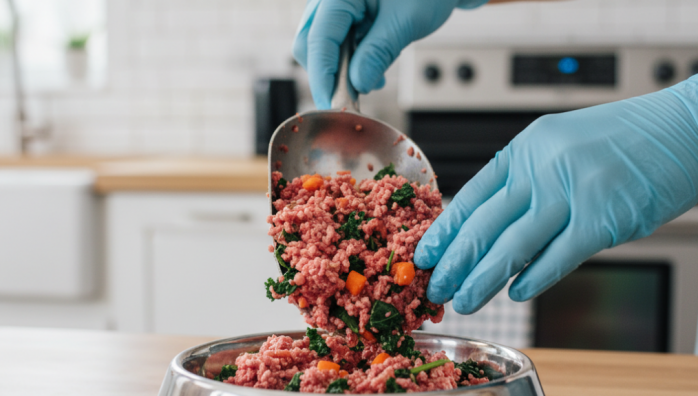
Before I even touch the food, I wash my hands thoroughly with soap and water. Sometimes, if I\'m portioning out a large batch for the week, I\'ll wear disposable gloves for extra security and easier cleanup. After I\'ve put the food in my pet’s bowl (which is always stainless steel or ceramic for easy sanitizing), I immediately wash all the utensils, the cutting board, and any surfaces the raw food might have touched with hot, soapy water. Then, I wipe the surfaces down with a pet-safe disinfectant. It sounds like a lot, but the whole process takes maybe two minutes once you get the hang of it.
Step 3: After the meal is finished
Once my dog has licked the bowl clean, I pick it up immediately. I don\'t let it sit out. The bowl gets washed with hot water and soap right away, separate from our own dishes. If you have a dishwasher, the high-temperature wash is a fantastic way to ensure it\'s properly sanitized. Finally, I wash my hands again. It\'s a simple bookend to the process: wash hands before, wash hands after.
Common mistakes I learned to avoid
In the beginning, I made a few slip-ups. I once used a sponge to wipe the counter after prepping, and then used that same sponge on my own dishes later. I caught myself and realized how easily cross-contamination can happen. Now, I use paper towels for raw-related cleanups. Another mistake is letting your pet lick your face or hands right after they\'ve eaten, before they\'ve had a drink of water to rinse their mouth. It’s a small detail, but it’s part of a complete safety mindset. These are just my personal experiences, and I always think it\'s wise to chat with a veterinarian or a canine nutritionist to make sure your specific handling plan is sound.