Preventing Plaque Buildup Dog Teeth
by admin in Pet Care Basics 167 - Last Update December 5, 2025
I used to dismiss my dog’s bad breath as just \'doggy breath.\' It felt like a normal, unavoidable part of being a pet owner. That changed during a routine vet visit when our veterinarian gently pointed out the yellowing plaque creeping up his back molars. It was a wake-up call for me. That \'normal\' smell was actually the first sign of a problem that could lead to pain, tooth loss, and even more serious health issues down the line. I knew I had to do something proactive.
Why I stopped ignoring \'doggy breath\'
That conversation with my vet made me realize that dental health isn\'t a vanity issue; it\'s a core component of my dog\'s overall wellness. Plaque is a sticky film of bacteria that, if left unchecked, hardens into tartar. This can push gums away from the teeth, creating pockets where more bacteria can thrive, leading to painful infections and periodontal disease. The thought of my happy-go-lucky companion being in silent pain because of my inaction was something I couldn\'t stomach. From that day on, I made preventing plaque buildup a priority.
The daily routine that made a huge difference
Creating a new habit for both me and my dog seemed daunting at first, but I broke it down into small, manageable steps. Consistency, I learned, is far more important than perfection.
Finding the right toothbrush and paste
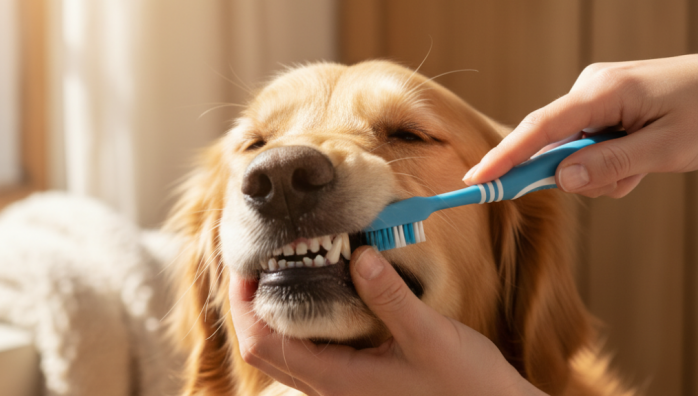
My first mistake was grabbing a brush that was too big and firm. My dog hated it. After some trial and error, I found that a small, soft-bristled finger brush worked wonders. It gave me more control and felt less intrusive to him. As for toothpaste, it\'s critical to only use a paste formulated for dogs. Human toothpaste contains ingredients like xylitol and fluoride, which are toxic to them. I chose an enzymatic toothpaste with a poultry flavor, which he quickly started to see as a treat.
My simple brushing technique
I don\'t aim for a perfect, two-minute scrub like a human dentist would recommend. My goal is a quick, positive session every evening. I let him lick some paste off the brush first. Then, I gently lift his lip and focus on the outside surfaces of his teeth, especially the back molars where plaque accumulates most. It\'s usually over in less than a minute. We follow up with lots of praise and a favorite toy. It\'s now just a normal part of our bedtime routine.
Beyond the brush: other tools in my toolkit
While daily brushing is the gold standard, I\'ve incorporated a few other things to support his dental health. These are supplements to our routine, not replacements.
- Dental Chews and Toys: I\'m very selective here. I look for chews that are firm enough to create a scraping action but not so hard they could fracture a tooth. The mechanical action of chewing is fantastic for scraping away new plaque.
- Water Additives: I was skeptical about these at first, but I tried a vet-recommended one. It’s a tasteless additive that helps reduce the bacteria in his mouth. While it\'s not a miracle cure, I\'ve noticed his breath is genuinely fresher overall since we started using it.
- Dietary Choices: The food our dogs eat plays a role, too. Certain dental-focused kibbles are designed to be larger and more abrasive to help clean teeth as they\'re chewed. This is just my personal experience, so I always recommend you chat with your vet before making any significant dietary changes.
When you need professional help
Sometimes, despite our best efforts, plaque hardens into tartar that can only be removed by a professional. With my older dog, we reached a point where an anesthetic dental cleaning was necessary to get a \'clean slate.\' It was scary, but the improvement in his health and comfort afterward was undeniable. If you see heavy, brown tartar, red or bleeding gums, or your dog seems to be in pain, it\'s time to let the professionals step in. They have the tools and expertise to safely clean below the gumline, where the real danger lies.