Introducing Toothbrushing to Your Dog
by admin in Pet Care Basics 180 - Last Update December 4, 2025
I still remember the first time I tried to brush my first dog\'s teeth. It was, to put it mildly, a complete disaster. There was squirming, a bit of drool-covered wrestling, and a toothpaste tube that ended up more on the floor than in his mouth. For a long time, I just gave up, thinking it was a lost cause. But then a vet visit revealed some early tartar buildup, and I knew I had to get serious. It took patience and a completely different approach, but I eventually cracked the code, and I want to share what I learned with you.
Choosing the right tools for the job
Honestly, half the battle is having the right equipment. I started with a human toothbrush, which was a huge mistake. They\'re too hard for a dog\'s gums. I quickly learned that you need two key things:
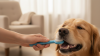
- A Dog-Specific Toothbrush: I\'ve had success with both the finger brushes (they look like little rubber thimbles) for getting a dog used to the feeling, and the long, dual-headed brushes for reaching the back molars once they\'re comfortable. The key is finding one that fits your dog\'s mouth and your hand.
- Enzymatic Dog Toothpaste: This is non-negotiable. Human toothpaste contains ingredients like xylitol, which is extremely toxic to dogs. Pet-specific toothpastes are not only safe but also come in flavors dogs actually enjoy, like poultry or beef. I found this simple switch made my dog see the brush as a treat dispenser rather than a torture device.
A step-by-step guide to a calm introduction
The secret I discovered was to stop thinking of it as a single task and start thinking of it as a multi-step training process. Rushing is your enemy. Here’s the slow and steady approach that finally worked for me.
Step 1: Get them used to having their mouth touched
Forget the brush for now. For a few days, just spend a moment or two gently lifting your dog\'s lips and touching their gums and teeth with your finger. Keep it short, praise them lavishly, and give them a treat. The goal is to make this a normal, pleasant interaction.
Step 2: Introduce the toothpaste
Once they\'re okay with you touching their mouth, put a small dab of the dog-friendly toothpaste on your finger. Let them lick it off. Most dogs love the taste, so they\'ll start associating you and your finger with something delicious. I did this for another few days until my dog was excited to see the toothpaste tube.
Step 3: Combine touch and paste
Now, put the toothpaste on your finger and gently rub it along their gum line. You\'re not scrubbing, just getting them used to the combination of the taste and the feeling of something rubbing on their teeth. Again, praise and reward. We\'re building positive associations.
Step 4: Introduce the brush
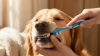
Let your dog sniff and lick the toothpaste off the brush first. Don\'t even try to put it in their mouth yet. The next session, gently touch the brush to one or two of their front teeth for just a second or two, then stop and praise. Slowly, over many sessions, you can build up to brushing a few teeth in a circular motion. My goal was always to end the session on a positive note, even if I only brushed two teeth.
What if my dog just won\'t cooperate?
Some dogs, especially those with past negative experiences, may resist more than others. If you\'re really struggling, don\'t despair. There are alternatives that, while not as effective as brushing, are far better than doing nothing. I\'ve used dental wipes, water additives, and specially formulated dental chews to supplement brushing on days when my dog just isn\'t feeling it. These can help reduce plaque, but they don\'t replace the mechanical action of brushing. This is just my experience, of course, and I always recommend chatting with your vet to create the best dental plan for your specific dog\'s needs.
Patience is your best friend
Remember, the goal is not a perfect, full-mouth scrub on day one. The goal is to build a lifelong habit that protects your dog\'s health without causing stress for either of you. It might take weeks or even a couple of months, but with consistency and a lot of positive reinforcement, you can make toothbrushing a calm and accepted part of your dog\'s routine. It\'s one of the best things you can do for their long-term wellness.