Daily Brushing Techniques for Dog Dental Health
by admin in Pet Care Basics 217 - Last Update December 4, 2025
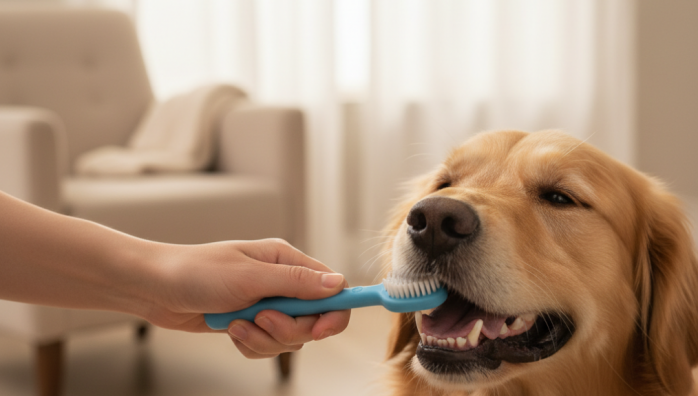
When I first got my rescue, Max, his breath was... an experience. I’d read about the importance of dental care, but the idea of sticking a brush in a dog’s mouth felt daunting. Honestly, my first few attempts were a clumsy disaster. He’d squirm away, and I’d end up with more dog-safe toothpaste on the furniture than on his teeth. But over time, I learned that the secret isn\'t force; it\'s patience, routine, and the right technique. Now, it’s just a normal two-minute part of our evening routine, and I want to share the simple, stress-free process that finally worked for us.
Choosing your tools of the trade
Before you even think about brushing, you need the right gear. I learned the hard way that this step is non-negotiable. Please, never use human toothpaste. It often contains xylitol, which is highly toxic to dogs, and fluoride, which can upset their stomach. I started with a pet-specific enzymatic toothpaste in a poultry flavor that Max absolutely loved. This was a game-changer; he saw it as a treat, not a chore.
As for the brush, there are a few options I experimented with:
- Finger brushes: These silicone brushes fit over your finger. I found them fantastic for the initial stages, as they gave me more control and felt less intimidating for Max.
- Dual-headed brushes: These have different-sized heads on each end, which is great for reaching both the big molars and the smaller front teeth. This is what we use now that he\'s comfortable with the process.
The key is finding what you and your dog are most comfortable with. Don\'t be afraid to try a couple of different types.
My step-by-step guide to a calm brushing session
This is the gentle, step-by-step method I developed. The goal is to make it a positive experience, not a wrestling match. Go at your dog\'s pace, even if it means you only do one step a day for the first week.
Step 1: Introduce the toothpaste
For the first few days, I didn\'t even use a brush. I simply put a dab of the dog toothpaste on my finger and let Max lick it off. This created an immediate positive association. He learned that this new thing was a tasty treat.
Step 2: Get them used to mouth handling
Once he was excited for the \'toothpaste treat\', I started gently touching his muzzle and lifting his lips for a second or two, then immediately giving him the toothpaste reward. I kept these sessions super short and positive, full of praise.
Step 3: Combine the brush and the paste
Next, I put the tasty toothpaste on the finger brush. I let him lick it off the bristles without trying to brush. This step is all about getting him comfortable with the tool itself being near his mouth.
Step 4: The first gentle brushes
Finally, it was time to brush. I lifted his lip and, using a gentle, circular motion, brushed a few of his large, easy-to-reach outer canine teeth for just a few seconds. Then, I stopped and gave him lots of praise. The key is to focus on the outer surfaces of the teeth, as that\'s where most plaque accumulates. You don\'t need to force their mouth open to get the inside surfaces at first.
Step 5: Build up duration and coverage
Over the next couple of weeks, I gradually increased the brushing time and started working my way back to his molars. Now, we can do his entire mouth in about a minute per side. Consistency is everything. A quick daily brush is far more effective than a long, stressful weekly one.
What I\'ve learned along the way
Patience truly is the most important tool. Some days will be better than others, and that\'s okay. The goal is progress, not perfection. Brushing your dog\'s teeth is one of the best things you can do for their long-term health, preventing painful dental disease down the line. While this is the routine that solidified dental care in our home, I always recommend chatting with your vet. They can give you a professional assessment and ensure you\'re on the right track for your specific dog\'s needs.