Daily Brushing for Pet Dental Health
by admin in Pet Care Basics 173 - Last Update December 5, 2025
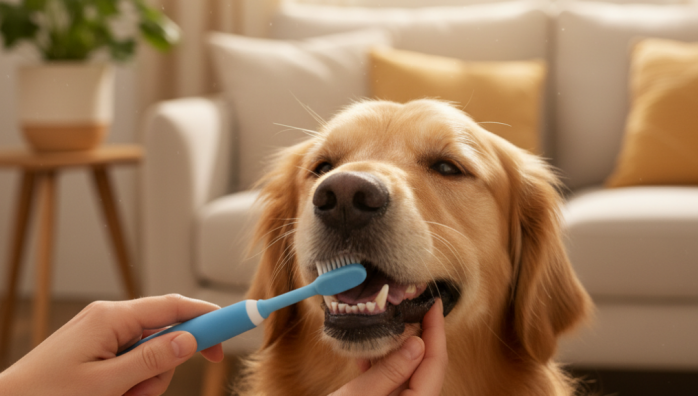
I have to be honest, for the first few years I had my dog, I completely neglected his teeth. I figured a few dental chews here and there were enough. It wasn\'t until a routine vet visit where the vet pointed out the significant plaque buildup and red, inflamed gums that I had my wake-up call. I felt a wave of guilt, realizing this was entirely preventable. That day, I committed to making daily brushing a non-negotiable part of our routine, and it has made a world of difference for both my dog and my cat.
Why daily brushing became a priority in my home
That vet visit was a real eye-opener. I learned that poor dental hygiene isn\'t just about bad breath. It\'s about plaque hardening into tartar, which leads to gingivitis and painful periodontal disease. What truly scared me was learning that bacteria from the mouth can enter the bloodstream and potentially damage vital organs like the heart, liver, and kidneys. Suddenly, that little toothbrush felt like one of the most important pet care tools I owned. It\'s not just about clean teeth; it\'s about their overall, long-term health.
Getting started: the tools I\'ve found work best
The pet aisle can be overwhelming, but after some trial and error, I\'ve landed on a simple toolkit. First and foremost, only use toothpaste specifically formulated for pets. Human toothpaste often contains ingredients like xylitol, which is extremely toxic to dogs and can cause foaming agents that are harmful if swallowed. I found that my dog prefers a poultry-flavored paste, while my cat is more accepting of a malt flavor. For the brush itself, I started with a soft, silicone finger brush. It felt less intimidating for both of us and allowed me to feel exactly where I was brushing. Now that my dog is used to it, I use a dual-ended toothbrush with a long handle to reach his back molars more effectively.
My step-by-step guide to a stress-free brushing routine
The key, I discovered, is patience and positivity. It\'s not something you can force. This is the gentle process I used:
- Week 1: The introduction. I didn\'t even use a brush at first. I\'d simply put a dab of the pet toothpaste on my finger and let them lick it off. I did this every day, followed by praise and a favorite treat, to create a positive association.
- Week 2: Getting used to the touch. After they accepted the toothpaste, I started gently lifting their lips and rubbing my finger (with toothpaste) along their teeth and gums for just a few seconds. Again, lots of praise followed.
- Week 3: The first brush. I introduced the finger brush. I focused only on the outside of the canines and front teeth for about 15-20 seconds. I kept the sessions super short and upbeat.
- Week 4 and beyond: Building the habit. I gradually increased the brushing time and started using the long-handled brush to reach the back teeth. Now, it\'s just part of our evening routine, right before their final treat of the day. They know what to expect and are surprisingly cooperative.
Remember, this is what worked for my pets, and it\'s always a good idea to chat with your vet before starting a new health regimen. They can offer tailored advice. Forcing the issue will only create fear, so take it slow. Daily brushing has not only improved my pets\' breath and gum health but has also become a quiet moment of bonding for us each day.