Popular Pet-Safe Indoor Plant Varieties
by admin in Pet Care Basics 113 - Last Update December 2, 2025
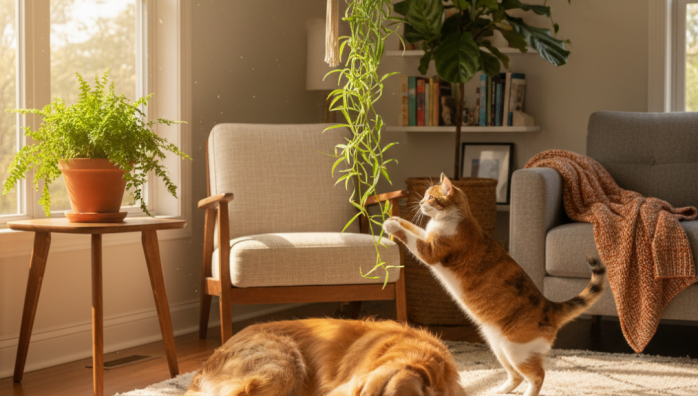
I remember the moment my heart dropped. I walked into the living room to find my curious kitten, Leo, batting at and nibbling on the leaves of a beautiful Dieffenbachia I’d just been gifted. I had no idea it was toxic. After a panicked call to the vet (thankfully, Leo was fine!), I completely re-evaluated how I brought greenery into our shared home. It took some trial and error, but I\'ve since cultivated an indoor jungle where both my plants and my pets can thrive safely. It’s not about giving up on houseplants; it’s about choosing the right ones.
My go-to list of beautiful and non-toxic plants
Over the years, I\'ve found a handful of plants that are not only gorgeous and relatively easy to care for but also give me complete peace of mind. These are the varieties I consistently recommend to fellow pet owners who want to add some life to their space without the worry.
The resilient spider plant (Chlorophytum comosum)
This is probably the first pet-safe plant I ever bought, and it’s still a favorite. They are incredibly forgiving and produce little \'spiderettes\' that are easy to propagate. My cats love to bat at the dangling babies, and I don\'t have to worry if they manage to chew on one. They are fantastic air purifiers, too, which is a huge bonus in a multi-pet household.
The lush Boston fern (Nephrolepis exaltata)
If you want a classic, lush, jungle-vibe plant, look no further. Boston Ferns have beautiful, feathery fronds and look amazing in hanging baskets, which also helps keep them out of a curious dog\'s reach. They do prefer higher humidity, so I keep mine in the bathroom, where it’s very happy. It’s completely non-toxic, so there are no worries if a leaf is occasionally nibbled.
The stunning prayer plant (Calathea/Maranta)
I am absolutely mesmerized by my Calathea collection. Their leaves, with intricate patterns of green, pink, and purple, fold up at night as if in prayer. They are a bit more dramatic about their watering needs, but their beauty is worth it. Knowing they are completely safe for my pets makes me love them even more. They bring so much color and life to a room without any of the risk.
The charming parlor palm (Chamaedorea elegans)
For anyone wanting a larger floor plant, the Parlor Palm is a fantastic choice. It gives you that tropical feel but is a slow grower and stays a manageable size indoors. It\'s completely non-toxic and surprisingly low-maintenance. My dog will occasionally sniff around its base, but I\'ve never had to worry about him getting sick from it.
A final note on pet and plant safety
Even with non-toxic plants, it\'s a good habit to discourage your pets from making a meal out of them. It can still cause mild stomach upset if they eat too much. I\'ve found that providing plenty of other enrichment, like cat grass for my felines, helps divert their attention. Always double-check any new plant\'s name on a trusted resource like the ASPCA\'s plant list, but the varieties I\'ve shared here have been a safe and beautiful foundation for my own pet-friendly home.