Popular Pet-Safe Indoor Plant List
by admin in Pet Care Basics 107 - Last Update December 1, 2025
I\'ll never forget the sheer panic I felt when I walked into my living room to find my new kitten, Leo, nibbling on the leaves of a beautiful dieffenbachia I\'d just bought. My heart dropped. I knew many common houseplants were toxic, but in the excitement of decorating, I\'d completely overlooked it. Thankfully, a frantic call to the vet and a watchful eye confirmed he was fine, but it was a lesson I learned the hard way: a beautiful home and a safe pet have to go hand-in-hand.
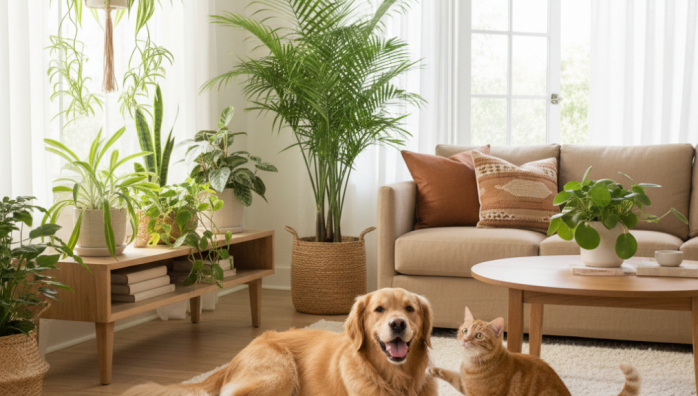
From that day on, I\'ve made it my mission to only bring plants into my home that won\'t cause a health scare. It took some research, but I discovered that you don\'t have to sacrifice a lush, green aesthetic for peace of mind. Many gorgeous and popular houseplants are completely non-toxic to our furry family members.
Why choosing pet-safe plants is non-negotiable
For me, it\'s not just about avoiding a potential vet bill; it\'s about creating a true sanctuary for my pets. Their curiosity is natural. They explore the world with their mouths, and it\'s my responsibility as their guardian to ensure their environment is free of hidden dangers. A toxic plant can cause anything from mild stomach upset to severe oral irritation, and in some cases, much worse. The peace of mind that comes from knowing my cat can bat at a hanging vine without consequence is priceless.
My go-to list of beautiful and non-toxic plants
Over the years, I\'ve curated a collection of plants that are not only stunning but also completely safe for my curious companions. Here are a few of my absolute favorites that are easy to find and care for.
The spider plant (Chlorophytum comosum)
This is the ultimate starter plant for any pet owner. It\'s incredibly resilient, looks fantastic in a hanging basket, and is completely non-toxic. My cats love to bat at the little \'spiderettes\' that dangle down, and I don\'t have to worry for a second. Plus, they\'re amazing air purifiers!
The parlor palm (Chamaedorea elegans)
If you want to add a touch of the tropics to your home, the Parlor Palm is a perfect choice. It\'s elegant, low-maintenance, and safe for both dogs and cats. I have one in my office, and it creates such a calming atmosphere without posing any risk.
The prayer plant (Maranta leuconeura)
I am absolutely mesmerized by the Prayer Plant. Its leaves, with their vibrant patterns, fold up at night as if in prayer. It\'s a beautiful, dynamic plant that\'s perfectly safe for pets. It does require a bit more humidity, but the visual payoff is well worth it.
The african violet (Saintpaulia)
For a splash of color, I always turn to African Violets. These small, flowering plants are non-toxic and can bloom year-round with the right care. They are a wonderful way to have flowers indoors without the risk associated with lilies or tulips.
The boston fern (Nephrolepis exaltata)
I love the lush, feathery look of a Boston Fern. They add a classic, full-bodied greenery to any room. They are completely safe for pets, though my cat does seem to think its fronds are his personal jungle gym. Since they\'re non-toxic, I just let him enjoy it.
A final thought on creating your green sanctuary
Creating a pet-safe home doesn\'t mean you have to live in a sterile environment. It\'s about making conscious choices. Always double-check a plant\'s toxicity before you buy it – a quick search of its scientific name is usually all it takes. By filling your space with plants from this list, you can cultivate a beautiful indoor garden that both you and your four-legged friends can enjoy, worry-free.