Pet-Safe Houseplants Your Cat Will Love
by admin in Pet Care Basics 130 - Last Update November 29, 2025
I\'ll be honest, for years I thought I had to choose: a beautiful, green-filled home or a happy, safe cat. My first cat, a mischievous tabby named Leo, seemed to have a personal vendetta against any plant I brought through the door. After one too many panicked calls to the vet over a nibbled leaf (thankfully, it was always a false alarm), I decided to become an expert in non-toxic flora. It wasn\'t just about avoiding disaster; it was about creating a home where we could both thrive.
What i look for in a cat-friendly plant
My criteria became pretty simple. First and foremost, it had to be 100% non-toxic, according to reliable sources like the ASPCA. Second, I wanted something that was relatively easy to care for—I have enough to worry about without a high-maintenance plant! And third, if the plant could withstand a little feline curiosity, or even be a source of enrichment, that was a huge bonus. It took some trial and error, but I\'ve landed on a few tried-and-true favorites that beautify my space without causing me constant anxiety.
My top 5 houseplants that are truly cat-safe
Here are the plants that have passed the ultimate test: surviving and thriving in my multi-cat household. Remember, while these are safe, it\'s always a good idea to chat with your vet if you have any concerns about your specific pet\'s health.
1. Spider plant (Chlorophytum comosum)
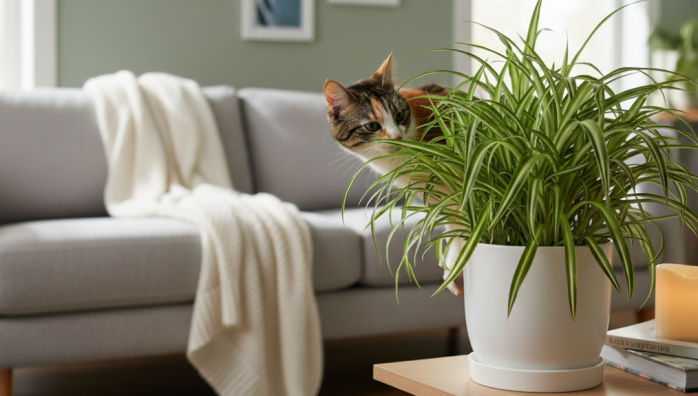
This is the holy grail for pet owners. Not only is it non-toxic, but cats are often drawn to its dangling \'spiderettes\'. I\'ve found it\'s a fantastic, safe distraction. It\'s also incredibly resilient and purifies the air. I hang mine from the ceiling to encourage some vertical playtime for my younger cat.
2. Parlor palm (Chamaedorea elegans)
If you want that lush, tropical vibe without the risk, the Parlor Palm is your answer. It’s elegant, low-maintenance, and completely safe for cats and dogs. I have one in my living room, and while my cats will occasionally bat at a frond, they\'ve never tried to make a meal of it. It adds a touch of green without any of the worry.
3. Catnip (Nepeta cataria)
This one might seem obvious, but why not grow the one plant your cat is *supposed* to chew on? I keep a small pot of fresh catnip on a low windowsill. It’s a designated “yes” plant that satisfies my cat\'s urge to nibble on greens and keeps her away from my other plants. It’s easy to grow and provides fantastic enrichment.
4. Boston fern (Nephrolepis exaltata)
I love the delicate, feathery look of ferns, but many varieties are toxic. The Boston Fern, however, is a beautiful and safe exception. It loves humidity, so I keep mine in the bathroom. Its cascading leaves are fun for my cat to watch, but she\'s never shown much interest in eating it, which I count as a win.
5. Calathea (Prayer plant)
The patterns on Calathea leaves are absolutely stunning, and I was so relieved to learn they are non-toxic. These plants have a fascinating habit of folding their leaves up at night, like hands in prayer. They\'re a bit more demanding with their watering schedule, but their beauty and safety make it worth the effort.
A final thought on plant safety
Even with non-toxic plants, I\'ve learned it\'s best to manage your cat\'s access. Too much of any plant material can cause an upset stomach. By providing designated cat-friendly greens like cat grass and keeping more decorative plants slightly out of reach, I\'ve created a happy, harmonious home for everyone—furry, leafy, and human alike.