Pet-Safe Herbs for Your Indoor Garden
by admin in Pet Care Basics 153 - Last Update November 30, 2025
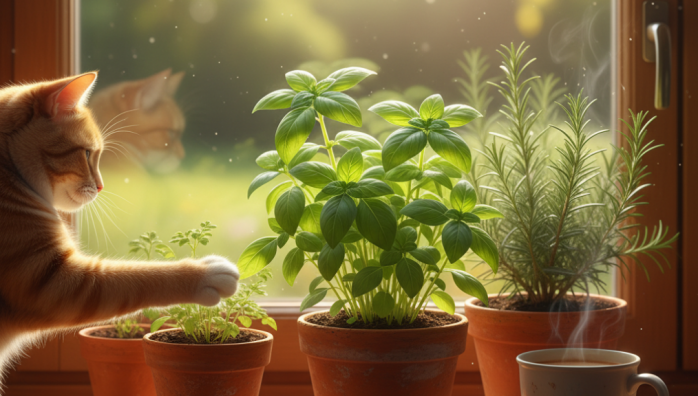
I\'ll never forget the moment I walked into my living room to find my curious tabby, Leo, munching on a leaf from a new houseplant I\'d just brought home. My heart sank. I had no idea if it was toxic, and the panic was real. That single event sent me on a mission to create a home environment that was both green and beautiful, but above all, completely safe for my furry family. That\'s how I discovered the joy of growing an indoor herb garden—it brings fresh scents, handy cooking ingredients, and most importantly, peace of mind.
My go-to herbs that are safe for pets
Over the years, I\'ve experimented with many different plants. Some were hits, some were misses, but I\'ve landed on a few favorites that are hardy, useful, and approved by my four-legged supervisors. These are the ones I always keep on my kitchen windowsill.
Basil
This is probably the easiest and most rewarding herb to grow indoors. My cats love to sniff it, but they rarely nibble. I love it because I can grab a few leaves for a pasta sauce anytime. It\'s completely non-toxic to both cats and dogs, making it a perfect starter herb.
Parsley
Parsley is packed with nutrients. I\'ve even heard it can help freshen a dog\'s breath. I sometimes chop a tiny, tiny amount into my dog\'s food as a garnish. Of course, this is something I discussed with my vet first, as too much of a good thing can cause stomach upset. Always consult your own vet before adding anything new to your pet\'s diet.
Rosemary
The pine-like scent of rosemary is fantastic, and it’s a tough plant. My dog completely ignores it, but it’s comforting to know it’s safe if he ever got curious. It’s a bit trickier to grow from seed, so I recommend buying a small starter plant.
Thyme
Another wonderfully fragrant herb that\'s perfectly safe for cats and dogs. It’s a low-growing, resilient plant that doesn\'t demand much attention, which was perfect for me when I was still developing my green thumb.
Setting up your worry-free garden
Getting started is simpler than you think. The most important lesson I learned was to control the entire growing process to ensure it\'s truly pet-safe.
- Choose the right soil: I always use an organic potting mix. This ensures there are no residual pesticides or chemical fertilizers that could harm a curious pet.
- Ensure good drainage: My first few attempts ended with sad, waterlogged plants. Now, I make sure every pot has drainage holes. Herbs don\'t like to have \'wet feet\'.
- Location, location, location: Most herbs need a good amount of sunlight—at least 6 hours a day. A south-facing windowsill is ideal. I learned this the hard way after my first batch of basil grew tall and spindly.
Creating a pet-safe indoor garden has been one of the most rewarding projects I\'ve undertaken as a pet owner. It brings a little bit of nature indoors without the constant worry. Remember, every pet is different, so it\'s wise to supervise them around any new plant, even safe ones, and a quick call to your vet is never a bad idea.