Managing Pet Anxiety After Worker Return
by admin in Pet Care Basics 113 - Last Update November 29, 2025
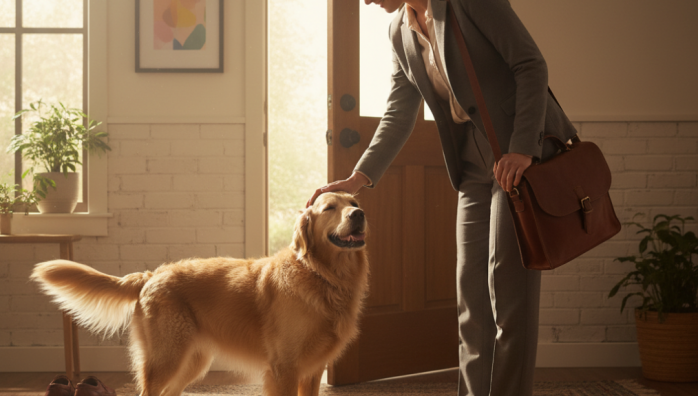
When my company announced a full return to the office, my first thought wasn\'t about my commute or my wardrobe. It was about my dog, Max. For two years, he\'d had me as a constant companion. The silence of the house, I realized, was going to be a shock to his system. Honestly, I underestimated how much. The transition from remote work back to the office was tougher on him than it was on me, and it took a lot of patience and learning to help him feel secure again.
Recognizing the signs in my own pet
At first, I didn\'t connect the dots. I\'d come home to a shredded cushion or find he hadn\'t touched his food. A neighbor mentioned he was whining and barking for much of the day. These weren\'t just signs of a \'naughty\' dog; they were cries for help. I learned to spot the more subtle signs too: excessive licking, pacing right before I left, and an almost frantic greeting when I returned. It became clear this was more than just missing me; it was genuine anxiety.
The gradual desensitization that worked for us
I knew I couldn\'t just fix this overnight. It had to be a slow, trust-building process. My approach was all about making my departure a non-event, something boring and predictable rather than scary and dramatic.
Starting with \'fake departures\'
This felt a little silly at first, but it was a game-changer. I\'d grab my keys and wallet, walk to the door, and then immediately come back inside and sit down. I did this over and over, extending the time I was outside from a few seconds to a few minutes. The goal was to break the association between my leaving-cues (keys, jacket, bag) and the long, lonely day ahead.
Creating a \'safe space\' sanctuary
Max needed a spot that was unequivocally his—a place he associated with calm and comfort. I set up his favorite cozy bed in a quiet corner of the living room with his most-loved blanket. I started feeding him his favorite treats there and only left his special enrichment toys in that spot. It became his go-to place to self-soothe when he felt a bit stressed, even when I was home.
The power of enrichment toys
A busy mind is a less anxious mind. Before I left for the day, I would prepare a couple of puzzle feeders or a frozen KONG-style toy stuffed with some dog-safe peanut butter. This did two things: it created a positive association with my leaving (I leave, yummy treat appears!) and it gave him a focused, rewarding task to work on for the first 20-30 minutes after I was gone, which is often the peak anxiety period.
Why a consistent routine became our foundation
Dogs thrive on predictability. We established a rock-solid morning routine: a brisk walk, breakfast, then some quiet cuddle time before I started my \'getting ready for work\' process. This consistency helped him understand the rhythm of the day. He learned that my departure was just one part of a cycle and that my return was just as certain. It gave him a sense of control and security in a situation that initially felt very unpredictable to him.
When professional guidance is the next step
I\'ll be honest, there were weeks when I felt like I wasn\'t making enough progress. I seriously considered consulting a certified animal behaviorist. For any pet owner facing this, remember that there is no shame in asking for professional help. Sometimes, the anxiety is too deep-seated to manage alone. It\'s always a good idea to chat with your vet first to rule out any underlying health issues that could be contributing to the anxiety. They can provide a health check and may even refer you to a trusted behavior specialist.