Managing Pet Alone Time Stress
by admin in Pet Care Basics 191 - Last Update December 5, 2025
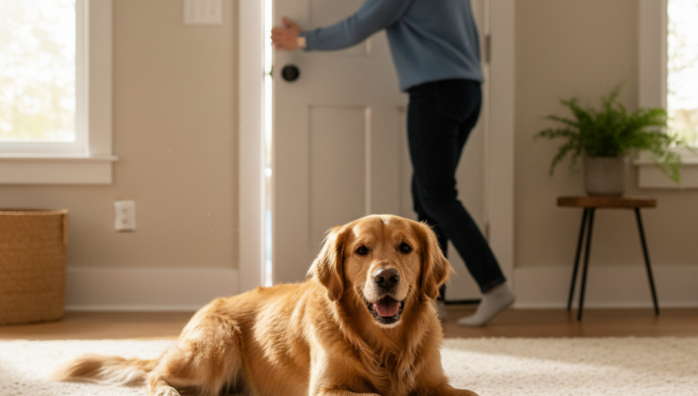
When I first switched to full-time remote work, I thought it was the ultimate dream for my rescue dog, Buddy. Constant companionship, midday cuddles, and endless belly rubs. But then, the world opened back up. My first trip to the grocery store that lasted more than an hour resulted in a chewed-up pillow and a very anxious pup. It hit me hard: I had created a furry co-worker who had no idea how to be alone. It was a stressful learning curve for both of us, but we figured it out, and I want to share what truly worked.
Recognizing the signs of alone-time stress
Honestly, at first, I mistook some of Buddy\'s anxiety for simple boredom. It wasn\'t until I set up a small camera that I saw the full picture. The constant pacing, the high-pitched whining, the frantic scratching at the door—it was heartbreaking. It wasn\'t just \'bad behavior\'; it was a cry for help. If you\'re noticing any of these, it\'s time to act:
- Destructive chewing or scratching, especially at doors and windows.
- Persistent barking, howling, or whining after you leave.
- Having accidents in the house, even if they are perfectly house-trained.
- Excessive drooling or panting.
- Pacing in circles or along a specific path.
- Trying to escape from their crate or room.
My step-by-step approach to building independence
Fixing this wasn\'t an overnight process. It took patience, consistency, and a lot of trial and error. My goal was to teach Buddy that my leaving wasn\'t a world-ending event; in fact, it could even be a positive experience for him.
Starting small with \'practice departures\'
I had to desensitize him to the triggers of my departure. I started by just picking up my keys and putting on my shoes, then sitting back down on the couch. I did this until he barely lifted his head. Then, I progressed to walking out the door for just 30 seconds and coming right back in. We slowly worked our way up from one minute to five, then ten, then thirty. It felt tedious, but it was the foundation for everything.
Creating a \'goodbye\' routine that isn\'t a big deal
I learned that my long, emotional goodbyes were making things worse. All that \'I\'ll miss you so much!\' cooing was just amping up his anxiety. Now, my routine is calm and boring. About five minutes before I leave, I give him a high-value puzzle toy stuffed with something delicious. I don\'t make a fuss. I just say a simple \'Be back soon\' and walk out. The toy redirects his focus and creates a positive association with me leaving.
Enrichment is a game-changer
A bored mind is an anxious mind. This was my biggest \'aha\' moment. Leaving Buddy with a food-stuffed KONG, a snuffle mat, or other puzzle toys gave his brain a job to do. It channels his nervous energy into a productive, rewarding activity. Instead of worrying about where I am, he\'s focused on figuring out how to get that last bit of peanut butter out of the toy.
When to seek professional help
I was able to manage Buddy\'s mild anxiety with these techniques, but some cases are much more severe. If your pet is harming themselves, destroying your home, or their anxiety isn\'t improving, it\'s absolutely time to call in a professional. This is just what worked for us, and I always recommend chatting with your vet or a certified animal behaviorist. They can help create a tailored plan and rule out any underlying medical issues. Your pet\'s well-being is always the top priority.