Calming Routines Before Pet Departure
by admin in Pet Care Basics 190 - Last Update December 6, 2025
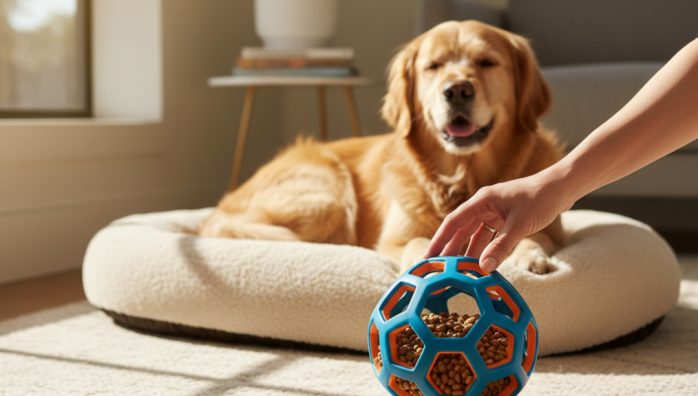
When I first switched to remote work, I thought my dog\'s mild separation anxiety would just... disappear. After all, I was home most of the time. I couldn\'t have been more wrong. The short trips to the grocery store or the gym became a source of major stress for both of us. The frantic barking as I grabbed my keys, the sad eyes at the window—it was heartbreaking. I realized the problem wasn\'t the duration of my absence, but the panic surrounding the departure itself. It took time and a lot of trial and error, but I finally developed a pre-departure routine that brought peace back to our home.
Why a predictable routine is a game-changer
I learned that for an anxious pet, predictability is everything. A consistent routine acts as a signal that everything is okay. It’s not about tricking them; it\'s about communicating in a language they understand: repetition and association. It tells them, \'Yes, I am leaving, but this is a normal part of our day, you are safe, and I will be back.\' It\'s a fundamental step in rebuilding their confidence and trust when they\'re alone.
My step-by-step calming departure ritual
This is the exact sequence that works for my rescue dog. I’ve found the timings are important, but the core principle is to lower the energy in the house, not ramp it up. You can and should adjust this to your pet\'s unique personality.
Step 1: The \'wind-down\' signal (30 minutes before leaving)
The frantic, last-minute rush was a huge anxiety trigger. So now, about 30 minutes before I need to leave, I subtly change the environment. I stop engaging in active play. I might put on a specific calming classical music playlist or a quiet podcast. This is the first, low-key cue that a transition is coming. There\'s no packing bags or jangling keys yet—just a gentle shift in the atmosphere.
Step 2: The \'settle station\' (15 minutes before leaving)
About 15 minutes before I walk out, I calmly lead my dog to his designated \'settle station\'—his comfiest bed in the living room. This is where the magic happens. I give him a high-value, long-lasting puzzle toy, like a frozen KONG filled with some pet-safe peanut butter. The goal is to get his brain working on a rewarding task, shifting his focus from my departure to the delicious challenge in front of him. I just place it down calmly and walk away.
Step 3: The quiet, no-fuss exit
This was honestly the hardest habit for me to break. I used to give long, emotional goodbyes, full of \'be a good boy\' and \'I\'ll miss you so much!\' I now know this was just fueling his anxiety. It made my leaving seem like a huge, dramatic event. Now, I gather my things quietly while he\'s engrossed in his toy and just... leave. No big farewell. This nonchalant exit reinforces the idea that me leaving is boring and not a cause for alarm.
Common mistakes i had to unlearn
Getting this right involved making a few mistakes first. Here\'s what I learned not to do:
- Making a big emotional deal out of leaving or returning. Coming home to a crazy, excited dog is fun, but I keep my greetings calm for the first few minutes to avoid reinforcing a frantic state of mind.
- Only giving the special puzzle toy when I leave. This can cause the pet to associate the amazing toy with the anxiety of you leaving. I make sure to give it to him sometimes when I\'m home, too.
- Punishing anxious behavior. Scratching, whining, or barking are symptoms of panic, not acts of disobedience. Punishment only increases fear and erodes trust.
- Skipping a pre-routine walk or play session. A tired, mentally stimulated pet is always a calmer pet. Releasing some energy an hour or so before the routine begins makes a world of difference.
Remember, this is what worked for my dog and me. Your pet\'s journey might look different. The key is patience and consistency. For severe cases of separation anxiety, this routine is a great tool, but I always recommend chatting with your vet or a certified animal behaviorist to create a comprehensive plan.