Desensitizing Pets to Your Departure Routine
by admin in Pet Care Basics 200 - Last Update December 4, 2025
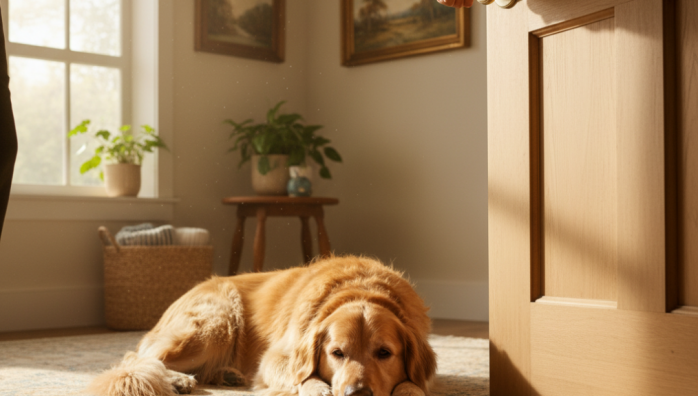
When I first transitioned to a hybrid work schedule, I didn\'t think much about how it would affect my rescue dog, Leo. But soon, I noticed a worrying pattern. The moment I picked up my laptop bag or jingled my keys, his tail would tuck, and he\'d start pacing. It was heartbreaking. His anxiety wasn\'t just about me being gone; it started the second he suspected I *might* be leaving. That\'s when I realized I had to address the triggers, not just the absence itself.
Understanding the power of cues
Our pets are masters of association. They learn that the sound of a can opener means food, a leash means a walk, and, in Leo\'s case, the sound of my keys meant imminent loneliness. Desensitization is the process of gently breaking that association. The goal, I learned, was to teach him that keys, shoes, and jackets are just normal, boring objects that don\'t always signal my departure. It’s about making the entire \'getting ready to leave\' process a non-event.
My step-by-step desensitization plan
This process requires patience, and it\'s not a one-day fix. I had to remind myself that we were un-learning months, maybe years, of ingrained associations. Here\'s the approach that worked for us.
Step 1: Identify and isolate the triggers
I sat down and made a list of every single thing I did before leaving the house. For Leo, the biggest ones were:
- Putting on my \'outdoor\' shoes
- Picking up my keys
- Grabbing my coat
- Packing my laptop bag
Step 2: Practice the cues without leaving
This was the core of the training. Throughout the day, when I had no intention of going anywhere, I would perform one of those triggers. For example:
- I\'d walk over, pick up my keys, and carry them to the kitchen while I made coffee, then put them back.
- I\'d put on my shoes and then sit on the couch to read a book for 15 minutes before taking them off again.
- I\'d put on my coat and just stand by the window for a moment, then hang it back up.
At first, he was on high alert. But after doing this randomly for a few days, he started to relax. The keys were no longer a guaranteed sign of abandonment. I made sure to stay completely calm and neutral during these exercises. No praise, no special attention—just treating it like a normal, boring part of the day.
Step 3: Introduce \'fake\' departures
Once he was less reactive to the individual cues, I started chaining them together. I\'d put on my shoes, grab my keys, and walk to the door. I\'d open it, step outside for literally one second, and then step right back in, taking everything off and going about my day. I slowly increased the duration—five seconds, thirty seconds, a minute. The key was to return *before* he could get truly anxious.
What I learned along the way
The most important lesson for me was to avoid emotional goodbyes and greetings. Making a big fuss when I left or returned only reinforced the idea that my departure was a huge deal. Now, I leave and return quietly. It lowers the emotional stakes for both of us. This whole process took a few weeks of consistency, but the result is a dog who now naps peacefully when he hears me getting ready to head out. While this approach was a game-changer for us, remember that every pet is an individual. If your pet\'s anxiety is severe, I always recommend chatting with your veterinarian or a certified animal behaviorist to create a plan tailored to their specific needs.