Identifying Safe Houseplants for Pet Households
by admin in Pet Care Basics 107 - Last Update November 27, 2025
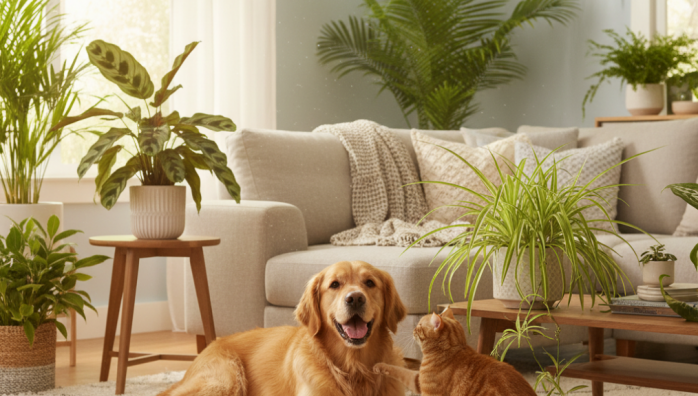
I\'ll never forget the moment I brought my first rescue dog, Buster, home. I\'d spent weeks preparing, but as he trotted into my living room, my eyes landed on my prized fiddle-leaf fig, and a wave of panic washed over me. I had absolutely no idea if my beloved indoor jungle was a minefield of potential toxins for my new best friend. That moment sent me down a rabbit hole of research, and honestly, it changed the way I approach being both a plant parent and a pet parent.
Why \'just a nibble\' is a risk I don\'t take anymore
In the beginning, I thought, \'He\'ll probably just sniff it.\' But curiosity, especially with young pets, is a powerful force. I learned that some of the most common houseplants contain compounds that can cause everything from mild mouth irritation and an upset stomach to severe issues like kidney failure. A lily, for example, is incredibly toxic to cats, and even a small amount of pollen can be dangerous. It\'s simply not a risk worth taking. After a close call with a friend\'s cat and a diffenbachia plant, I made it my mission to create a space that was safe without sacrificing the greenery I loved.
My personal list of beautiful and non-toxic plants
Creating a pet-safe indoor garden is completely achievable! It just requires a bit of knowledge. Over the years, I\'ve curated a collection of plants that are both gorgeous and give me total peace of mind. Here are a few of my absolute favorites that thrive in my home alongside my cat and dog.
The resilient spider plant
This is the ultimate starter plant for any pet owner. It\'s incredibly forgiving if you forget to water it, and it produces little \'spiderettes\' you can propagate. Best of all, it\'s completely non-toxic. My cat loves to bat at the dangly leaves, and I don\'t have to worry for a second.
The elegant calathea family
Also known as prayer plants, these are stunning. Their leaves often have intricate patterns and they famously fold up at night. They are perfectly safe for pets. They do require a bit more humidity and care than a spider plant, but their beauty is well worth the effort in my opinion.
The lush boston fern
If you want to add a touch of feathery, vibrant green to your home, the Boston Fern is a fantastic choice. They look amazing in hanging baskets, which is a great way to keep plants out of a curious pet\'s immediate path anyway. They are completely safe if a leaf happens to be chewed on.
Some common plants I now avoid
Learning what\'s safe also means learning what isn\'t. I had to sadly re-home a few of my plants when I started my journey as a pet owner. The most common toxic plants I see in people\'s homes include: Lilies (all varieties are a no-go for cat owners), Sago Palms, Pothos, Snake Plants, and Aloe Vera. While some of these only cause mild irritation, others are severely toxic. For me, it was easier to just stick to the 100% safe list. Always remember, if you\'re not sure about a plant, it\'s best to consult a resource like the ASPCA\'s plant list or, even better, have a quick chat with your vet.