Home Teeth Brushing for Dogs and Cats
by admin in Pet Care Basics 179 - Last Update December 1, 2025
I\'ll be honest, the idea of brushing my cat\'s teeth used to seem completely absurd. My first dog, a stubborn beagle, made it feel like a wrestling match. For years, I relied on dental chews and hoped for the best, ignoring that tell-tale \'doggie breath\'. It wasn\'t until a vet pointed out the early signs of gingivitis in my aging cat that I realized I had to face the toothbrush. It was a wake-up call that \'bad breath\' isn\'t just a quirk; it\'s often the first sign of painful dental disease.
Why at-home brushing is a game changer
When I started digging into it, the statistics were startling. The vast majority of dogs and cats have some form of periodontal disease by the time they\'re just three years old. This isn\'t just about yellow teeth or bad breath. It\'s about bacteria from the mouth getting into the bloodstream and potentially affecting the heart, kidneys, and liver. Professional cleanings under anesthesia are fantastic and necessary, but they can\'t be the only line of defense. Daily brushing is what prevents the plaque from building up in the first place. Think of it like this: you wouldn\'t just see your dentist once a year and never brush your own teeth in between, right?
The essential tools for the job
Getting started felt overwhelming, but the toolkit is actually quite simple. Over time, I\'ve found what really works and what just gathers dust in a drawer. Here’s my go-to list:
- Pet-specific toothpaste: This is non-negotiable. Human toothpaste contains ingredients like fluoride and xylitol, which are toxic to our pets. Pet toothpastes are not only safe to swallow but they also come in flavors pets actually enjoy, like poultry or malt. This was a huge turning point for my fussy cat.
- The right toothbrush: You can use a special pet toothbrush with angled heads, a small brush that fits over your finger, or even a soft-bristled children\'s toothbrush. I started with a finger brush to get my pets used to the sensation before moving to a proper brush.
- Patience and positive reinforcement: This isn\'t a tool you can buy, but it\'s the most important one. You\'ll need high-value treats and a calm demeanor. This process is a marathon, not a sprint.
My step-by-step approach to brushing
I learned the hard way that you can\'t just jump in and start scrubbing. The key is to introduce the process in slow, positive stages over several days or even weeks. This is the method that finally worked for me, for both my dog and my surprisingly cooperative cat.
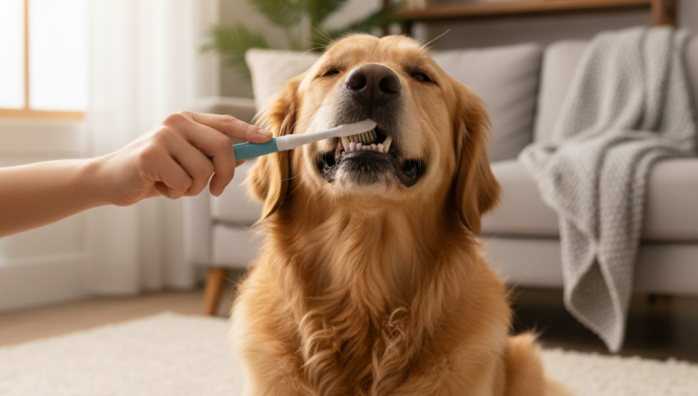
First, I just let them lick a tiny bit of the pet toothpaste off my finger. We did this for a few days until they saw it as a treat. Then, I put the toothpaste on the brush and let them lick it off. The next step was to gently touch the brush to their teeth for a second, then immediately reward them. We slowly built up from there, one tooth at a time. My goal was never a perfect, two-minute scrub. It was just to make it a positive, daily routine. I focus on the outside of the teeth, especially the big molars in the back, as that\'s where most of the tartar builds up.
Remember, some resistance is normal, but it should never be a battle. Keep sessions short and sweet, and always end on a positive note. And while this routine has made a world of difference for my pets, I always recommend chatting with your vet. They can show you the best technique and ensure there aren\'t any existing painful issues before you start.