Gradual Departures to Ease Pet Anxiety
by admin in Pet Care Basics 111 - Last Update November 27, 2025
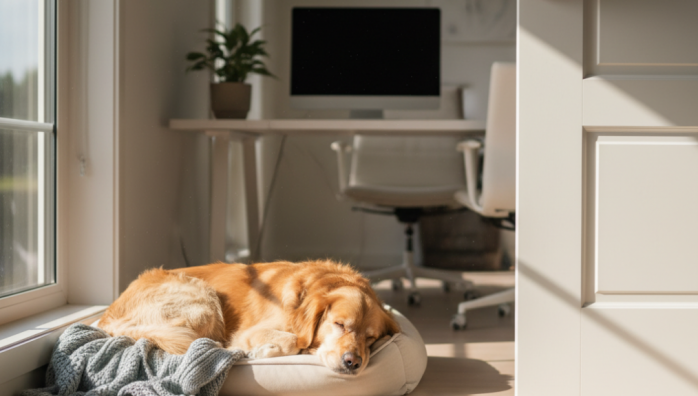
When I first started working from home full-time, I thought it was the best thing ever for my dog, Finn. He had his person with him 24/7. The problem, I later discovered, was that he got too used to it. The first time I had to go to an all-day, in-person meeting, I came home to a chewed-up door frame and a very stressed-out pup. It broke my heart. I realized that my constant presence had accidentally created a classic case of separation anxiety. I had to un-teach what we\'d both come to see as our normal.
The paradox of the remote worker\'s pet
It sounds counterintuitive, doesn\'t it? We\'re home more than ever, yet our pets can become more anxious about us leaving. They don\'t understand the difference between you being in a Zoom meeting in the other room and being gone from the house entirely. To them, your presence is just a constant. When that constant is suddenly removed, their world feels unstable. Simply ripping off the band-aid and leaving for hours doesn\'t work; it just reinforces their fear that your departure is a terrifying, unpredictable event.
Why just \'getting it over with\' can make things worse
I tried just leaving for short trips, hoping he\'d \'get used to it.\' Honestly, it only escalated the problem. The whining started the second I picked up my keys. The frantic barking would follow me down the driveway. I learned the hard way that you can\'t just expect a pet to cope. You have to actively teach them that being alone is safe and, most importantly, that you will always come back. This is where the concept of gradual departures completely changed our lives.
My step-by-step guide to practicing gradual departures
The goal here is to desensitize your pet to the triggers of you leaving and to slowly build their tolerance for being alone. It requires patience, but I promise it\'s worth it. Remember, this is what worked for my dog, but every pet is an individual. For severe cases, I always recommend chatting with your vet or a certified animal behaviorist.
- Identify the triggers: For Finn, it was the sound of my keys and me putting on my shoes. For a few days, I just did those things randomly without actually leaving. I\'d jingle my keys and then sit on the sofa. I\'d put on my shoes and then go make a coffee. The goal is to make these cues meaningless.
- The \'doorway dance\': Start incredibly small. I literally just stood up, walked to the door, touched the handle, and sat back down. I did this until he didn\'t even lift his head. Then I progressed to opening the door and closing it. Then stepping out for one second and coming right back in.
- The 30-second trip: Once your pet is calm with the doorway dance, try leaving for a very short duration. I\'m talking 30 seconds. Go out, close the door, come straight back in. The key is to return before they have a chance to get anxious.
- Extend the time slowly: Over days and weeks, gradually increase the time you\'re gone. Go from 30 seconds to one minute. One minute to three. Three to five. The jumps should be small enough that your pet barely notices. If they show signs of stress (barking, whining), you\'ve gone too fast. Go back to the previous duration where they were successful and stay there for a few more sessions before trying to increase it again.
Making your return a non-event
This was the hardest part for me. When I came back, I wanted to shower Finn with affection to reassure him. But experts advise against this, as it makes your return a huge, exciting event, which in turn makes your absence more noticeable. When you come back in, try to be calm and low-key for the first few minutes. Unpack your things, get a glass of water, and then, once everyone is calm, give your pet some gentle attention. This teaches them that your comings and goings are just a normal, boring part of the day.
It took time and a lot of repetition, but this process rebuilt Finn\'s confidence. Now, he just snoozes on his bed when I leave. He knows that being alone is okay and that I\'ll be back. It\'s given us both so much more freedom and peace of mind.