Enrichment Toys for Anxious Remote Worker Pets
by admin in Pet Care Basics 142 - Last Update December 3, 2025
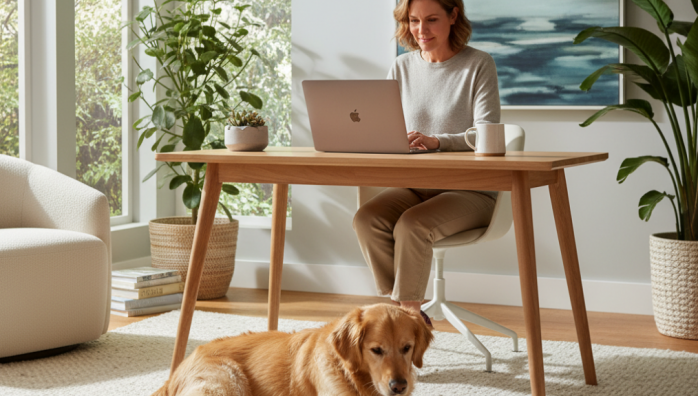
When I first switched to full-time remote work, I thought it would be the ultimate dream for my dog, Leo. More time together, right? But I started noticing something strange. Every time I\'d hop on a long video call or really get into a focused work session, he\'d start pacing, whining softly, or nudging my hand incessantly. He was home with me, but he was still anxious. It was a type of separation anxiety I hadn\'t expected – a separation from my attention.
The unique challenge of the \'always home\' pet
As a remote worker, you\'re physically present, but mentally, you\'re often miles away, deep in spreadsheets or client calls. Our pets don\'t understand this distinction. To them, we\'re right there, but we\'re not available. This can be incredibly confusing and stressful for them, leading to what I call \'remote worker separation anxiety.\' It\'s that feeling of being alone in a crowded room, but for our furry companions. I knew I couldn\'t just stop working, so I had to find a way to help him feel secure and engaged on his own.
My \'aha\' moment with enrichment toys
I’d heard about enrichment toys, but I honestly thought they were just fancy treat dispensers. I decided to give them a try out of desperation, starting with a simple rubber toy you can stuff with food. The first time I gave it to Leo, filled with some of his favorite kibble mixed with a bit of peanut butter, the change was immediate. Instead of pacing, he was completely absorbed. He was licking, sniffing, and problem-solving. It wasn\'t just a distraction; it was a job. This was my \'aha\' moment: enrichment isn\'t about keeping them busy, it\'s about giving their brain a healthy workout and satisfying their natural instincts.
What to look for in anxiety-busting toys
After that initial success, I dove deep into the world of enrichment. I learned that not all toys are created equal, especially when you\'re trying to soothe an anxious mind. Here\'s what I\'ve found works best:
- Toys that encourage licking: Licking is a self-soothing behavior for dogs and cats. It releases calming endorphins. Lick mats are fantastic for this. I spread some pet-safe yogurt or pumpkin puree on one before a long meeting.
- Toys that promote sniffing: A dog\'s primary sense is smell. Activities like sniffing and foraging are incredibly de-stressing. Snuffle mats, where you hide treats in fabric strips, are perfect for this. It tires them out mentally more than a long walk sometimes!
- Toys that require problem-solving: Puzzle feeders, which come in various difficulty levels, make your pet work for their food. This builds confidence and provides a fantastic mental outlet. I found that starting with a very easy one was key to avoiding frustration.
How i make enrichment part of our daily routine
Simply throwing a toy on the floor and hoping for the best didn\'t work. I had to be strategic. Now, I prepare Leo\'s \'work\' when I\'m making my morning coffee. I\'ll stuff a couple of toys and put them in the freezer, which makes them last longer. I save these special, high-value toys specifically for times I know I need to be undisturbed. This has created a positive association: when mom is on a call, I get the best puzzles! It\'s transformed our work-from-home life. He\'s calmer, I\'m more productive, and our bond feels stronger than ever. Of course, these toys are a tool, not a cure-all. For severe anxiety, I always tell fellow pet parents to have a chat with their veterinarian or a certified animal behaviorist to create a comprehensive plan.