Gradual Departure Training for Anxious Pets
by admin in Pet Care Basics 90 - Last Update November 27, 2025
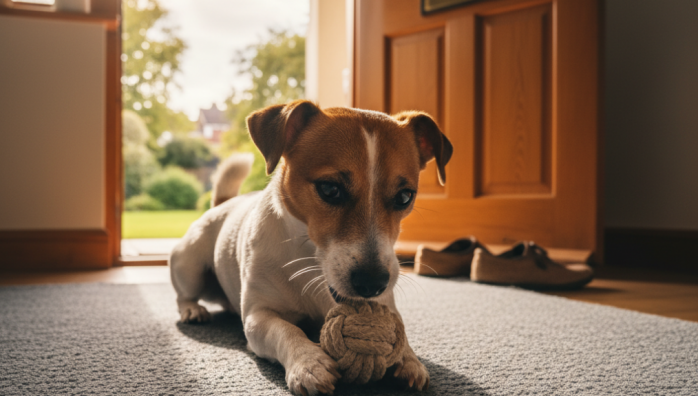
When I first started working from home, I thought it was the best thing ever for my dog, Leo. He had his favorite co-worker around 24/7! But when the world started opening up again and I needed to run simple errands, I discovered a problem I’d accidentally created. Leo, who had always been confident, would start whining and pacing the second I picked up my keys. It was heartbreaking, and I honestly felt trapped. It took me a while to realize that for him, my constant presence had become the new normal, and any deviation from that felt like a crisis.
Understanding the remote work effect on our pets
So many of us are in this boat. We’ve spent years being a constant source of comfort and companionship for our dogs and cats. They\'ve forgotten how to be alone because they haven\'t had to practice. This isn\'t their fault, and it isn\'t ours either—it\'s just a new challenge of our modern work lives. The key, I learned, isn\'t to feel guilty but to re-teach our pets that being alone is safe and, dare I say, even a little boring. That’s where gradual departure training came in and completely changed the game for us.
My step-by-step method for gradual departures
The goal here is to make your leaving so uneventful that it’s not worth getting worked up about. It requires patience—and I mean a lot of it—but the payoff is a calm pet and your freedom back. This is the exact process that worked for Leo.
Step 1: Make your departure cues meaningless
First, I had to figure out what triggered his anxiety. For Leo, it was my shoes, my keys, and my jacket. For a week, I randomly did these things throughout the day *without* leaving. I’d put on my shoes and then sit on the couch to watch TV. I’d jingle my keys and then go to the kitchen to get a snack. After a few days, he stopped associating the jingle of keys with impending doom. He barely even looked up.
Step 2: Start with \'non-event\' absences
This is where it feels a bit silly, but trust me, it works. I started by just walking to the door, opening it, stepping out, and immediately coming back in. I did this without any fanfare—no big hello or goodbye. I just came back in and went about my business. We did this until he was completely calm with the door opening and closing. Then, I extended it to 10 seconds. Then 30. The key is to return *before* your pet has a chance to panic.
Step 3: Slowly, slowly extend the time
Once he was comfortable with absences under a minute, I began adding more time. I’d leave for two minutes to take the trash out. Then five minutes to check the mail. I never pushed it. If I came home and he was whining, I knew I had gone too long, and the next time I would scale it back. A simple pet camera helped me monitor his stress levels so I knew exactly when to return. It\'s a marathon, not a sprint.
Step 4: Create a positive \'alone time\' ritual
I wanted him to associate my leaving with something good. Now, just before I leave, I give him a special puzzle toy filled with some of his favorite treats. It’s a high-value item he only gets when I\'m gone. It keeps his mind busy and creates a positive association with my departure. He’s now more focused on the toy than on the fact that I\'m walking out the door.
The one big mistake i was making
I used to give Leo so many cuddles and say “I’ll be back soon, be a good boy!” in a sad, emotional voice right before I left. I thought I was reassuring him, but I was actually signaling that something bad was about to happen and fueling his anxiety. The single best change I made was making my exits and entrances incredibly boring. Now, it\'s just a calm \'see you later\' and I walk out. It\'s made all the difference.
Remember, this process is unique to every pet. What took me a few weeks might take you a month, and that\'s okay. The most important thing is consistency and patience. Of course, if your pet\'s anxiety is severe, it\'s always a good idea to chat with your veterinarian or a certified animal behaviorist to create a more tailored plan. This is just what worked wonders in our home, and I hope it can help in yours, too.