Creating Departure Routines for Anxious Pets
by admin in Pet Care Basics 165 - Last Update November 30, 2025
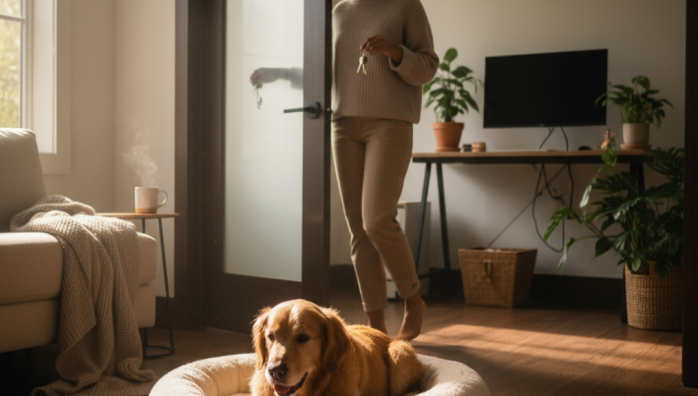
When I first transitioned to working from home full-time, I thought it was the best thing ever for my dog. We were together 24/7! The problem, which I didn\'t see coming, was what happened when I needed to leave. A simple trip to the grocery store would trigger a full-blown meltdown of whining, pacing, and anxious barking. The guilt was immense. I realized that by being constantly present, I had inadvertently set the stage for severe separation anxiety. It took time and a lot of patience, but creating a solid departure routine changed everything for us.
Why a \'routine\' is a game-changer
Anxious pets thrive on predictability. When they don\'t know what\'s happening, their minds can spiral into a state of panic, assuming the worst—that you\'re never coming back. A departure routine isn\'t about the specific actions; it\'s about creating a predictable sequence of events that signals, \"Everything is okay, this is normal, and you are safe.\" It replaces chaos with calm and turns a scary unknown into a manageable non-event. For me, the \'aha\' moment was realizing I was trying to manage the anxiety, when I should have been focused on building confidence in my dog.
The mistake of the dramatic goodbye
I used to be so guilty of this. I\'d spend five minutes hugging my dog, telling him what a good boy he was and that I\'d be back soon, my voice full of emotion. In my mind, I was reassuring him. In his mind, my emotional state was confirming that something big and scary was happening. This emotional fanfare only amplifies their anxiety. The single most effective change I made was to make my departures boring and completely matter-of-fact.
My step-by-step calm departure routine
This is the framework that worked for my anxious companion. Remember, every pet is different, so you may need to adjust it. This is a great starting point, but if your pet\'s anxiety is severe, I always recommend a chat with your veterinarian or a certified animal behaviorist.
- The 15-Minute Calm-Down: About 15 minutes before I plan to leave, I stop all interaction. No petting, no talking, no eye contact. This sounds harsh, but it\'s crucial for lowering the emotional stakes. It creates a period of calm independence *before* I\'m even gone.
- Prepare the Special Distraction: This is the fun part for them! I have a few durable puzzle toys that I fill with high-value treats (like frozen peanut butter or their favorite snack). The key is that they *only* get these specific toys when I am leaving. This builds a powerful positive association with my departure.
- Gather Your Things Calmly: I desensitized my dog to departure cues like grabbing my keys or putting on my jacket. I started doing these things randomly throughout the day without leaving. Now, when I actually do it to leave, it\'s no longer a trigger.
- The Quiet Exit: When it\'s time to go, I place the special toy on his bed, say a simple, unemotional \"Be back soon,\" and walk out the door. No long goodbyes, no drama.
Don\'t forget the arrival routine
Just as important as leaving calmly is arriving calmly. When I walk back in the door, I ignore my dog\'s excited jumping and whining for the first few minutes. Once he has all four paws on the floor and is in a calmer state, then I greet him with calm petting. This reinforces that my coming and going is a normal, low-key part of the day, not a massive, emotional event.