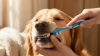
Effective Brushing Techniques for Canine Teeth
by admin in Pet Care Basics 131 - Last Update November 28, 2025

I remember the exact moment I realized I had to get serious about my dog\'s dental health. It wasn\'t a lecture from the vet; it was just that persistent, sour \'doggy breath\' that seemed to follow him everywhere. I’d been ignoring it, thinking it was normal. But after some research, I understood it was a clear sign that plaque and tartar were building up, and I felt a wave of guilt. I knew I had to learn how to brush his teeth, and honestly, the thought was completely overwhelming.
My journey to finding the right tools
The pet store aisle was a maze of different brushes, pastes, and gels. At first, I bought one of those little rubbery brushes that goes on your finger. It seemed less intimidating, right? Well, for my dog, it was just a new chew toy. He spent more time trying to nibble my finger than letting me clean anything. It was a frustrating start. After a few failed attempts, I switched to a long-handled toothbrush with a small, angled head, specifically designed for a dog\'s mouth. This was a game-changer. It allowed me to reach his back molars without putting my entire hand in his mouth. For toothpaste, I let him sample a couple of pet-safe flavors until we found one he genuinely seemed to like—the poultry flavor was a winner. Making it a tasty experience for him was half the battle.
The step-by-step method that actually worked for us
Getting the right gear was one thing; getting him to cooperate was another. It took patience, and I had to break it down into tiny, positive steps. This is the routine that finally clicked.
Step 1: Making friends with the toothpaste
Before I even tried to use the brush, I spent a few days just letting him lick a small dab of the doggy toothpaste off my finger. I’d praise him enthusiastically, making it feel like a special treat. This built a positive association right away. The goal was for him to see the toothpaste tube and get excited, not scared.
Step 2: Introducing the brush
Next, I put a little toothpaste on the brush and just let him lick it off. I didn\'t try to brush yet. I\'d just hold it near his mouth and let him investigate. After a couple of days of this, I\'d gently touch the bristles to his front teeth for a second, then pull away and give him lots of praise. It was all about desensitization.
Step 3: The brushing motion
Once he was comfortable, I started making small, circular motions on his outer canines—the big pointy ones. I focused only on the outside surfaces, as that\'s where most tartar accumulates. I kept the sessions incredibly short, like 30 seconds total, and always ended on a positive note with a treat or a game of tug. Over time, I slowly worked my way to the back molars. It\'s not about a deep scrub; it\'s about gentle, consistent disruption of plaque. And remember, while this is what I found effective, I always suggest discussing your dog\'s specific dental needs with your veterinarian to form the best plan.
Mistakes I made that you can avoid
My biggest mistake at the start was trying to do too much, too soon. I wanted perfect, pearly whites on day one, and that just stressed both of us out. Keep it short, positive, and consistent. Another key thing I learned is to never, ever use human toothpaste. Many contain ingredients like xylitol which are highly toxic to dogs. Stick to veterinarian-approved products. It took time, but now, tooth brushing is just a normal, calm part of our daily routine, and that foul breath is a distant memory.