Routine Tooth Brushing Techniques for Dogs
by admin in Pet Care Basics 133 - Last Update November 30, 2025
I\'ll be honest, the idea of brushing my dog\'s teeth used to feel like a chore I could easily skip. I figured dental chews were enough. It wasn\'t until a routine vet visit for my older Lab, Max, that I had a wake-up call. The vet pointed out significant tartar buildup and the beginnings of gingivitis. The potential for pain, tooth loss, and even more serious health issues linked to poor dental hygiene became very real to me. That\'s when I committed to making daily tooth brushing a non-negotiable part of our routine.
Why daily brushing became my priority
Beyond preventing painful dental disease, I noticed other benefits once we got into a rhythm. Max\'s breath improved dramatically—a huge plus for our cuddle sessions! I also felt more connected to his overall health. This daily check-in allowed me to notice any changes in his mouth, like a sore gum or a chipped tooth, much sooner than I would have otherwise. It became less of a chore and more of a crucial, five-minute act of preventative care.
The tools that actually worked for us
I went through a bit of trial and error with products. Human toothpaste is a definite no-go as it contains ingredients like xylitol, which is toxic to dogs. Here’s the simple kit that I\'ve found most effective:
- A Dog-Specific Toothpaste: I opted for an enzymatic toothpaste with a poultry flavor. The flavor makes the experience more of a \'treat\' for Max, and the enzymes help break down plaque even in the spots I might miss.
- A Dual-Headed Toothbrush: A brush designed for dogs, with a large head for the outer surfaces and a smaller one for the harder-to-reach spots, was a game-changer. The angled handle made it so much easier to maneuver.
- Finger Brushes for Beginners: When I first started, a soft-bristled finger brush was less intimidating for both of us. It helped him get used to the sensation before I introduced a full-sized brush.
My step-by-step tooth brushing method
Creating a calm, predictable routine was the key to my success. Rushing or being stressed will only make your dog anxious. Here’s the process that works for us every evening after our last walk:
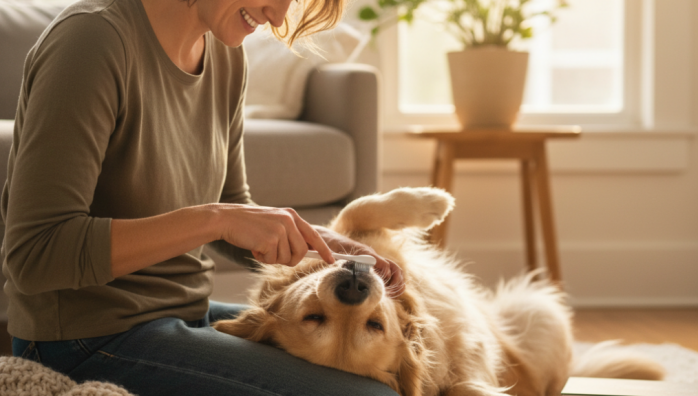
- Choose a Calm Time and Place: We sit on the floor in the living room when the house is quiet. I avoid restraining him, which can create fear. Instead, I make it a positive, one-on-one moment.
- Let Them Taste the Toothpaste: I start by putting a small dab of the dog toothpaste on my finger and letting him lick it off. This reinforces that the taste is good.
- Start Slow with a Finger or Gauze: For the first week, I just gently rubbed the toothpaste on his teeth and gums with my finger. The goal was simply to get him comfortable with me working in his mouth.
- Introduce the Brush: Once he was relaxed with step 3, I introduced the toothbrush. I lift his upper lip and start with the large, easy-to-reach canine and premolar teeth, using gentle, circular motions. I focus on the outside surfaces, as that\'s where most tartar accumulates.
- Praise and Reward: Throughout the process, I use a calm, encouraging voice. When we\'re done, even if it was only for 30 seconds, he gets lots of praise and a favorite (non-dental) treat. The whole process is now under two minutes.
What i did when my dog resisted
It wasn\'t perfect from day one. Max would sometimes pull his head away or clamp his mouth shut. My biggest lesson was patience. I never forced it. If he seemed stressed, I\'d stop, give him a pet, and try again for just a few seconds the next day. The goal is progress, not perfection. Remember, this is about long-term health, and building a positive association is more important than a perfect brushing session every single time. While these techniques worked wonders for us, I always recommend chatting with your vet to create the best dental plan for your specific dog\'s needs.