Clipping Your Dog's Nails Safely at Home
by admin in Pet Care Basics 122 - Last Update November 29, 2025
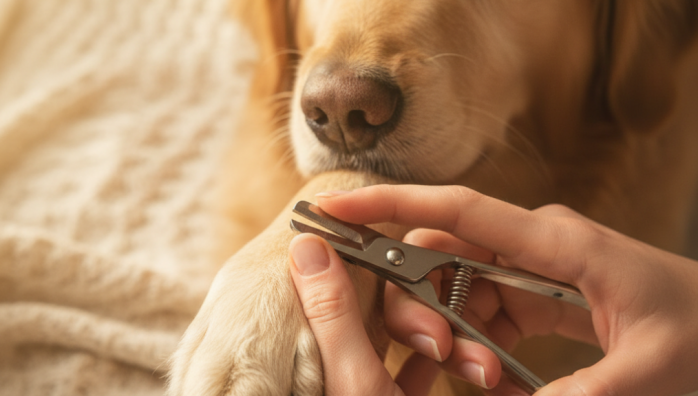
I still remember the first time I tried to clip my dog\'s nails. My hands were shaking, he was squirming, and we both ended up more stressed than when we started. That distinct \'click-clack\' sound on the hardwood floors was a constant reminder of my failure. For years, I outsourced the task to groomers, feeling a pang of guilt each time. I felt like I should be able to handle this basic part of his care myself, but the fear of hurting him was just too great.
Why I finally committed to at-home nail trims
It was a conversation with my vet that changed my perspective. She explained that for many dogs, the car ride and strange environment of a grooming salon can be more stressful than the trim itself. Learning to do it in the comfort of our home could transform it from a dreaded event into a simple bonding moment. That was my \'aha\' moment. I decided to stop avoiding it and start learning. It wasn\'t an overnight success, but with patience and the right approach, it has become a calm, routine part of our lives.
The essential tools that changed everything for me
For the longest time, I thought all clippers were the same. I was wrong. Having the right gear not only makes the job easier but also much safer. This is the simple toolkit I swear by:
- High-quality clippers: I personally prefer the scissor-style clippers. I find they give me more control and a cleaner cut than the guillotine style, especially on my dog\'s thicker nails. The key is to make sure they are sharp; dull clippers can crush the nail, which is painful.
- A nail grinder (optional but recommended): After clipping, I use a grinder to smooth any rough edges. It\'s also a great alternative for dogs who absolutely hate the clippers. I had to spend a few weeks getting my dog used to the sound, but it was worth it.
- Styptic powder: This is my non-negotiable safety net. If you accidentally clip the quick (the blood vessel in the nail), this powder stops the bleeding almost instantly. I have it open and ready every single time, just in case.
- High-value treats: This is about making positive associations. I use small pieces of chicken or cheese—something he absolutely loves and only gets during our \'pedicure\' sessions.
My step-by-step process for a stress-free trim
This is the routine that I\'ve refined over the years. Remember, the goal isn\'t to get all the nails done in one sitting. If your dog gets stressed, stop and try again tomorrow. Patience is everything.
Step 1: Setting the mood
I wait until my dog is sleepy and relaxed, usually after a long walk or a good play session. I get my tools ready and sit on the floor with him in a quiet room. I don\'t make a big deal out of it; I just start by giving him some gentle pets and a treat.
Step 2: Finding the quick
This was my biggest fear. On dogs with light-colored nails, you can often see the pinkish quick inside. On my dog\'s dark nails, it\'s impossible. So, my rule is to be conservative. I only trim off the very tip of the nail, the part that hooks down. The idea is to take off tiny slivers at a time.
Step 3: The \'little bit at a time\' technique
I hold his paw firmly but gently. I take one clipper and snip just the very end of one nail. Then, I immediately give him a treat and praise him. \'Good boy!\' I\'ll do one nail, then take a break. Sometimes, on a good day, we\'ll do one whole paw. On an off day, maybe just two nails. The key is to always end on a positive note before he gets anxious.
Step 4: What to do if you hit the quick
It has happened to me, and it\'s okay. The first time, I panicked, but now I know what to do. If you see a drop of blood, stay calm. Your dog will feed off your energy. I calmly take a pinch of styptic powder, press it firmly onto the nail tip, and hold it there for about 30 seconds. It works like a charm. Then I give my dog lots of love and treats and we end the session for the day.
A final word of encouragement
Learning this skill took me time, and it\'s okay if it takes you time, too. The goal is progress, not perfection. Every calm session builds trust. While this is what has worked for me and my dog, I always recommend chatting with your vet or a professional groomer for a hands-on demonstration. They can offer tips specific to your dog\'s breed and temperament. You can do this!