At-Home Teeth Cleaning for Dogs
by admin in Pet Care Basics 126 - Last Update November 28, 2025
I\'ll be honest, the first time my vet mentioned my dog\'s tartar buildup, I felt a wave of guilt. I was doing everything else right—the walks, the good food, the cuddles—but I\'d completely neglected his dental health. The thought of putting him under anesthesia for a professional cleaning was scary, and frankly, expensive. That was my wake-up call to figure out a sustainable, at-home routine that worked for both of us.
Why I started taking at-home dental care seriously
It wasn\'t just about avoiding a vet bill. I learned that poor dental hygiene can lead to serious health issues for dogs, including problems with their heart, liver, and kidneys. Bacteria from the mouth can enter the bloodstream and cause havoc. For me, this wasn\'t just about clean teeth anymore; it was about protecting my best friend\'s overall health and giving him a longer, more comfortable life. I realized that a few minutes of effort each day could prevent a lot of pain and suffering down the road.
My simple guide to brushing your dog\'s teeth
Getting started was the hardest part. My dog was not a fan at first, and it took a lot of patience. Here’s the process that I found works best, broken down into manageable steps that transformed the experience from a wrestling match into a calm bonding moment.
Step 1: Choosing the right tools
I learned quickly that human toothpaste is a huge no-no; it contains ingredients like xylitol that are toxic to dogs. I went to my local pet store and found an enzymatic toothpaste designed for dogs, which comes in flavors they actually like, such as poultry or beef. For the brush, I started with a soft-bristled finger brush to get him used to the sensation. It felt less invasive to him. Now, we\'ve graduated to a long-handled, angled dog toothbrush that lets me reach his back molars more easily.
Step 2: Making it a positive experience
This was the game-changer. I didn\'t just grab my dog and start brushing. For the first week, I simply let him lick the dog toothpaste off my finger. Then, I\'d gently rub the toothpaste on his gums with my finger. The whole time, I used a calm, happy voice and gave him lots of praise. The goal was to associate the toothpaste and the act of me touching his mouth with something pleasant. Only after he was comfortable with that did I introduce the finger brush, and later, the full toothbrush.
Step 3: The actual brushing technique I use
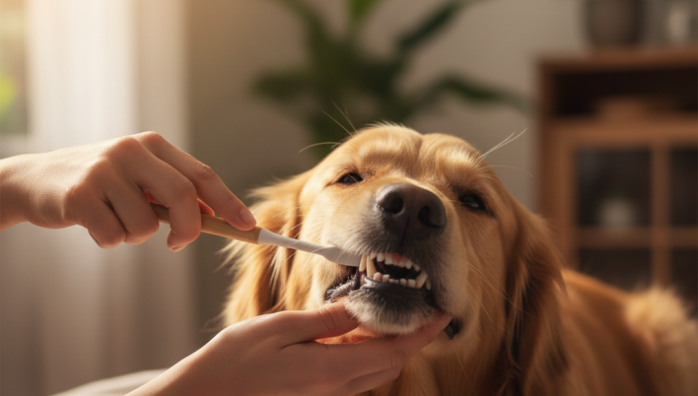
I aim for a daily brushing, but I admit some days we only manage a few times a week. Consistency is key. I gently lift his lip and brush the outer surfaces of his teeth in a circular motion, focusing on the gumline where plaque loves to hide. I don\'t worry too much about the inside surfaces, as his tongue does a decent job of keeping those clean. The whole process takes less than two minutes now. I always end with a special treat or a game of fetch to reinforce it as a positive routine.
Other things I do to support my dog\'s dental health
Brushing is the gold standard, but I\'ve found that a few other things help. I provide safe, high-quality dental chews and toys designed to scrape away plaque as he chews. I also sometimes add a vet-approved water additive to his bowl, which helps reduce bacteria. Of course, I always chat with my vet before introducing anything new to his routine to make sure it\'s a good fit for him.
When to see a professional
My at-home efforts have made a huge difference, but they don\'t replace professional veterinary care. I still take him for his annual check-ups, where the vet examines his teeth thoroughly. If I ever notice things like very bad breath, broken or loose teeth, bleeding gums, or a reluctance to eat, I know it\'s time to book a vet appointment immediately. At-home care is about prevention, but a professional is essential for addressing existing problems.