Crate Training Your Dog Against Separation Anxiety
by admin in Pet Care Basics 131 - Last Update November 28, 2025

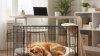
When I first switched to working from home, I honestly thought it would solve all my dog\'s separation anxiety issues. I was there all the time, right? The reality hit me hard the first time I left for a simple grocery run. The frantic barking I heard from the hallway told me my physical presence wasn\'t the magic cure I\'d hoped for. It was about his fear of being alone, period. That\'s when I decided to revisit crate training, not as a cage, but as a tool to build his confidence and give him a true safe space. It was a game-changer for both of us.
Understanding the \'why\' behind the crate
For years, I looked at crates as a kind of \'doggy jail,\' and I felt guilty even considering one. My perspective shifted when a trainer explained it to me as a den. In the wild, canines seek out small, enclosed spaces for security and rest. The goal, I learned, wasn\'t to confine my dog, but to provide a personal, predictable sanctuary that was all his. Once I started thinking of it as his private bedroom instead of a cage, the entire training process felt more positive and purposeful.
The foundational steps I took
Patience was the most important ingredient in this recipe. Rushing the process is the number one reason it fails, and I had to constantly remind myself to go at my dog\'s pace, not mine. These are the small, deliberate steps that led to our success.
Step 1: Making the crate a happy place
First, I made the crate the best place in the house. I put his favorite soft blanket inside. I started feeding all his meals in there with the door wide open. I’d randomly toss high-value treats like freeze-dried chicken inside for him to discover. The rule was simple: amazing things happen in and around the crate.
Step 2: Starting with the door open
For the first week, the crate door was never closed. I wanted him to feel total freedom to go in and out as he pleased. I used a verbal cue, like \"go to your bed,\" and rewarded him with praise and a treat every time he went inside on his own, even for a second.
Step 3: Closing the door for seconds, not minutes
This was the step I almost messed up by moving too fast. I started by closing the door for literally three seconds, then opening it before he had a chance to feel anxious. I’d give him a treat and walk away. We slowly, over many days, built this up to 10 seconds, then 30, then a full minute, all while I was sitting right there.
Step 4: Building duration while you\'re home
As a remote worker, this was my advantage. I could practice with him in his crate while I was in the same room, then in the next room over with the door open. He learned that being in his crate didn\'t always mean I was leaving the house. This broke the association between the crate and the panic of my departure.
Common mistakes I learned to avoid
I wasn\'t perfect, and I made a few missteps that I had to correct. The biggest lesson was to never, ever use the crate as a form of punishment. Sending a dog there when they\'re in trouble will poison it as a safe space. I also learned not to make a big, emotional fuss when I was leaving or returning. A calm, matter-of-fact attitude helped signal to him that my comings and goings were no big deal.
A final thought on patience and consistency
Crate training isn\'t a quick fix, especially for an anxious dog. It’s a process of building trust. There were good days and days where we had to take a step back. But by staying consistent and always keeping it positive, my dog\'s crate has become his genuine happy place. When he\'s feeling overwhelmed, he often takes himself there for a nap. Of course, every dog is an individual. This is what worked for us, but if your dog is showing signs of extreme distress or panic, I always recommend chatting with your veterinarian or a certified professional dog trainer to find the best path forward for your specific situation.