Building Pet Confidence for Alone Time
by admin in Pet Care Basics 158 - Last Update November 28, 2025
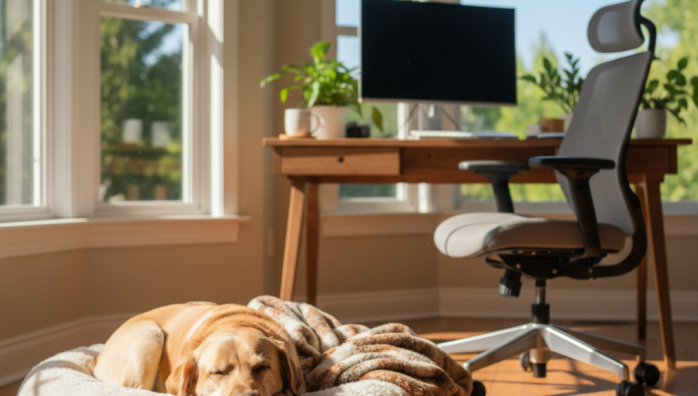
When I first switched to working from home, I pictured blissful days with my dog snoozing at my feet. And for a while, it was just that. But I started noticing a new, unsettling behavior. If I went to grab the mail or run a quick errand, I\'d come back to a whining, stressed-out pup. My constant presence had accidentally created a dependency I never intended. It was a tough realization that my being home 24/7 was actually making it harder for him to be alone.
Understanding the remote work paradox
It sounds counterintuitive, but our constant availability can erode a pet\'s independence. They get used to us being the center of their world, every minute of the day. When that suddenly changes, even for 15 minutes, their world feels like it\'s falling apart. I had to unlearn some of my own habits and reteach my dog that being alone is not just okay, but a normal, safe part of life. It was a journey, but one that brought back his quiet confidence.
My practical plan for building independence
I developed a gentle, step-by-step process based on patience and positive reinforcement. It wasn\'t about quick fixes; it was about fundamentally changing his perception of alone time from something scary to something neutral, or even pleasant.
Step 1: creating a dedicated \'zen zone\'
First, I made sure his crate and bed area was the best place in the house. I stopped using it only when I left. Instead, I started feeding him his favorite treats in there randomly throughout the day. It became his personal den, a place for good things, not a precursor to abandonment. He started going in on his own just to relax, which was a huge first win for us.
Step 2: mastering the \'non-event\' departure
This felt silly at first, but it was a game-changer. I started by just walking to the door, touching the handle, and walking away. Then I\'d open it and close it. I slowly built up to stepping outside for 10 seconds, then 30, then a minute, all while staying completely calm. The key was to make my leaving and returning as boring as possible. No big, emotional goodbyes or frantic, excited greetings. This taught him my departures weren\'t a big deal.
Step 3: the power of high-value distractions
A worried mind needs a job. Right before I\'d practice a departure, I\'d give him a special puzzle toy, like a KONG-style toy stuffed with some frozen peanut butter or his favorite wet food. It was a treat he *only* got when he was going to be alone. This did two things: it created a positive association with my leaving and it kept his brain so busy, he hardly had time to worry. Honestly, sometimes I\'d come back in and he\'d barely look up from his toy!
Step 4: establishing a predictable routine
Pets thrive on routine. I made sure our days had structure—predictable times for walks, meals, and playtime. This stability helps them feel secure because they know what to expect. Within this routine, I also scheduled \'alone time\' practice, so it just became another normal part of our day. It helped him understand that while I might leave, I always come back, and life continues on its happy, predictable course.
Building this confidence took time and consistency, but the peace of mind is priceless. Seeing him relaxed and secure, whether I\'m on a video call in the next room or out grabbing groceries, is the ultimate reward. If your pet is showing severe signs of distress, I always recommend chatting with your vet or a certified animal behaviorist to rule out any underlying issues and get a tailored plan.