Balancing Essential Nutrients in a BARF Diet
by admin in Pet Care Basics 129 - Last Update November 27, 2025
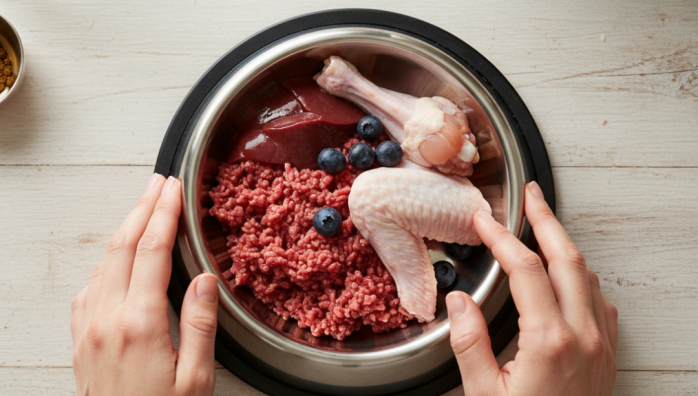
When I first decided to transition my dog to a Biologically Appropriate Raw Food (BARF) diet, I was overwhelmed. The internet was a storm of conflicting advice, and I was genuinely scared of getting it wrong. The biggest fear I had was nutrient imbalance. How could I possibly replicate the \'complete and balanced\' promise on a bag of kibble? It took time, a lot of reading, and some trial and error, but I eventually found a rhythm and a system that gave me confidence. I want to share the core principles that helped me get there.
The foundational \'BARF\' ratio: my starting point
Honestly, the thing that saved me from analysis paralysis was the general BARF ratio. It\'s not a rigid law, but a fantastic guideline to start with. Most people in the raw feeding community I follow use something like this:
- 80% Muscle Meat: The main source of protein, amino acids, and B vitamins.
- 10% Raw Edible Bone: This is for calcium, phosphorus, and other crucial minerals.
- 5% Liver: A powerhouse of Vitamin A and other essential nutrients.
- 5% Other Secreting Organs: Think kidney, spleen, or pancreas, which provide a different profile of vitamins and minerals.
Thinking in these percentages for my dog\'s daily or weekly intake, rather than every single meal, made it so much more manageable. I stopped obsessing over making every single bowl \'perfect\' and focused on balance over time.
Going beyond the basics: the nutrients I almost missed
While the ratio is a great start, I soon learned that a few key areas needed special attention to ensure my dog was truly thriving. These were my personal \'aha\' moments.
Omega-3s: not just for shiny coats
I noticed that just feeding beef or chicken wasn\'t providing enough Omega-3 fatty acids, which are vital for reducing inflammation and supporting brain health. I quickly learned to incorporate oily fish like sardines or salmon into his meals a few times a week. On other days, I might add a small amount of phytoplankton or a quality fish oil. It made a noticeable difference in his coat and energy levels.
Calcium and phosphorus: the critical balancing act
The \'10% bone\' part used to terrify me. But raw, non-weight-bearing bones (like chicken wings, necks, or feet) are soft, fully digestible, and the primary source of natural calcium. The key I learned is that the meat on the bone helps maintain the ideal calcium-to-phosphorus ratio. Getting this right is so important for long-term bone health. Of course, you should always supervise your pet with bones, but it\'s a cornerstone of the diet. As always, I recommend chatting with your vet about the right size and type of bones for your specific dog.
Essential vitamins and minerals from organ meats
I initially made the mistake of thinking heart was an organ meat in the \'secreting organ\' category. It\'s not! Heart is a fantastic muscle meat. True secreting organs like the liver and kidney are incredibly nutrient-dense. Liver is so rich in Vitamin A that you must be careful not to overfeed it, which is why it\'s only 5% of the diet. Variety is key here to provide a broad spectrum of nutrients.
My personal checklist for a balanced bowl
Today, when I prep my dog\'s food, I have a mental checklist. It\'s less about exact grams and more about variety and composition over the week. I ask myself:
- Have I included at least 3 different protein sources this week? (e.g., beef, chicken, turkey)
- Is there a source of Omega-3s? (e.g., fish, oil)
- Is the bone content appropriate for the meat\'s richness?
- Have I included both liver and another secreting organ?
- Did I add a small amount of low-glycemic veggies or berries for antioxidants?
This journey has been incredibly rewarding. Seeing my dog\'s health improve has made all the initial anxiety worth it. Remember, this is what has worked for my family and our pets. It’s always a great idea to work with a holistic veterinarian or a certified canine nutritionist to tailor a diet perfectly for your dog\'s unique needs.