Recognizing Feline Gum Disease Symptoms
by admin in Pet Care Basics 86 - Last Update November 30, 2025
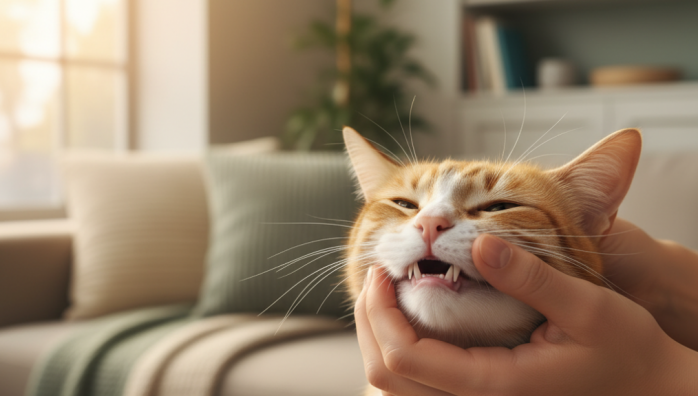
I used to think my cat Leo\'s bad breath was just a quirky part of his personality. We\'d joke about his \'tuna breath,\' not realizing it was the first whisper of a much bigger problem. It wasn\'t until a routine vet visit that I learned a hard lesson: dental health in cats is silent, and the signs are easy to miss if you don\'t know what to look for. That experience completely changed how I approach feline wellness, and I want to share what I learned so other pet parents can be more proactive than I was.
The subtle signs I almost missed
Looking back, the clues were there long before things got serious. They were just so subtle that I brushed them off as normal cat behavior. The most significant one was the bad breath, or halitosis. It wasn\'t just fishy; it was a persistent, foul odor that you could smell from a few feet away. I now know that\'s a classic sign of bacteria building up. Another early indicator was a very faint red line right where his gums met his teeth. You had to really look for it, but it was the beginning of inflammation, known as gingivitis.
Behavioral clues that signal discomfort
Cats are masters at hiding pain, a lesson I\'ve learned over and over. They won\'t often cry out. Instead, their discomfort shows up in their habits. Here are a few things I noticed with Leo that, in hindsight, were clear signs of oral pain:
- Picky eating: He suddenly started turning his nose up at his favorite crunchy kibble, preferring only wet food. I thought he was just being fussy.
- Chewing on one side: I\'d watch him eat and notice he was tilting his head, avoiding one side of his mouth completely.
- Less grooming: A cat in pain often grooms less. His coat started to look a bit scruffy, which was unusual for my normally meticulous boy.
- Pawing at his mouth: Occasionally, I\'d see him bat at his face or rub it against the furniture, which I now understand was his way of saying, \'it hurts.\'
Of course, these can be signs of other issues too, which is why I always stress that a conversation with your vet is the most important step. This is just my experience, and every cat is different.
More obvious red flags you can\'t ignore
As the gingivitis progressed, the symptoms became harder to ignore. If you see any of these, it\'s a sign that things have become more advanced and a vet visit is urgent. I wish I had acted sooner when I saw these.
- Red, swollen, or bleeding gums: That faint red line I mentioned earlier became a pronounced, angry red. Sometimes I\'d see a tinge of blood on his toys after he\'d been chewing.
- Drooling: An increase in drooling, sometimes with a bit of blood in it, is a major red flag for significant oral pain.
- Visible tartar: A brownish-yellow buildup on the teeth, especially the back molars, is a clear sign of plaque hardening into tartar.
- Withdrawing or irritability: My once-cuddly cat became a bit cranky. He\'d flinch if I tried to pet his head near his mouth. It was heartbreaking, and it was all because he was in constant, low-grade pain.
Learning to spot these symptoms has made me a much more vigilant and, I hope, a better cat parent. Regular at-home checks are now part of our routine, and professional dental cleanings are a non-negotiable part of his preventative care. It\'s a journey, but seeing him happy and pain-free makes it all worth it.