Mobility Aids for Senior Pet Movement
by admin in Pet Care Basics 122 - Last Update December 3, 2025
I\'ll never forget the moment it truly hit me. My sweet, old dog, who had spent a decade leaping onto the couch without a second thought, just stood there, looking from the cushion to me with a soft whine. He tried to jump, but his back legs just didn\'t have the power anymore. It was a subtle, quiet moment, but it was a clear signal that our world was changing. Watching a beloved companion struggle with mobility is one of the hardest parts of their golden years, but I learned that it doesn\'t have to be a period of decline. It can be a new chapter of care, and for us, mobility aids were the key.
Recognizing the subtle signs of mobility decline
Before that day at the couch, there were smaller signs I almost missed. A bit of a slip on the hardwood floor, a hesitation before going down the deck stairs, or taking a little longer to get up after a nap. These are often the first whispers that your pet\'s body is aging. Arthritis, muscle loss, and general stiffness are common in senior dogs and cats, and acknowledging these signs is the first step toward helping them. It’s not about them being \'old\'; it’s about adapting their environment to their new needs, just as we would for any family member.
The mobility aids that changed everything for us
Once I started looking, I was amazed at the options available. It wasn\'t about finding one magic solution, but about building a toolkit to support my dog in different situations. Honestly, it made me feel empowered to help him maintain his dignity and happiness.
For navigating the home and car
Our slippery floors were a major hazard. I started with simple, non-slip runner rugs to create safe pathways. Then, I invested in a lightweight, foldable ramp. It was a game-changer for getting him into the car for vet visits without me having to lift him, which saved both our backs. We also used it for the three steps leading out to the garden. I also found that non-slip booties or paw grips gave him incredible confidence when walking on tile or wood floors.
For support on walks and stairs
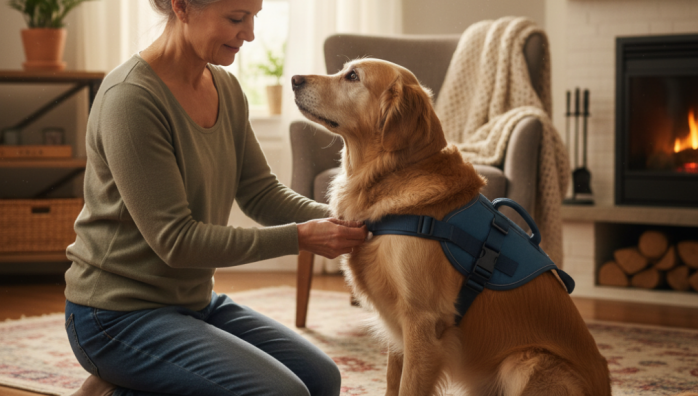
Walks are sacred, but they were getting shorter and more difficult. This is where a good support harness made all the difference. I found one with a handle over the back that allowed me to take a little weight off his hips as we walked, especially going up a curb. For the stairs inside, a simple rear-lift sling was a lifesaver. It’s essentially a padded band that goes under their belly or hips, with handles for you to hold. It gave him the little boost he needed to manage the stairs safely without me having to carry him.
For more advanced needs
While my dog never needed one, I have friends whose pets have thrived with the help of a pet wheelchair or cart. I used to think of them as a sad last resort, but I\'ve completely changed my view. Seeing a dog, previously unable to walk, happily trotting through a park on their wheels is incredible. It’s not an end; it’s a restoration of freedom and joy.
A few things i learned along the way
Introducing any new aid requires patience. I let my dog sniff and investigate the ramp for days before we ever used it, rewarding him with treats for just being near it. Proper fit is also crucial, especially for harnesses, to avoid chafing or discomfort. And most importantly, I learned to watch his body language. He told me what was working and what wasn\'t. Of course, I always looped our veterinarian into the conversation to ensure the aids were appropriate for his specific health needs. This is just what worked for us, and I always recommend chatting with your vet to create the best plan for your own furry friend.