Mental Enrichment for Apartment Dwelling Dogs
by admin in Pet Care Basics 117 - Last Update November 27, 2025
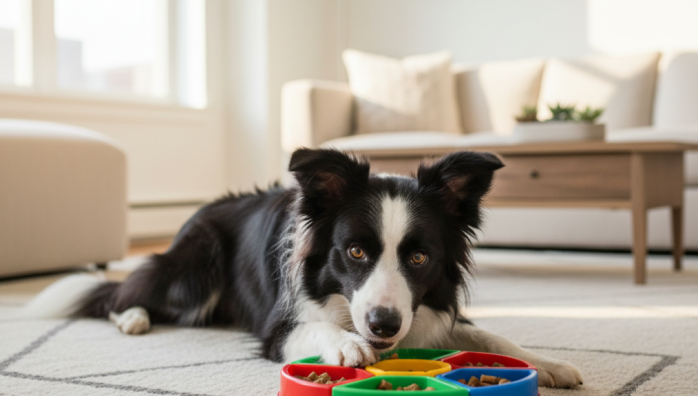
When I first brought my energetic cattle dog mix home to my city apartment, I felt a pang of what I can only describe as \'space guilt.\' I’d look at his intelligent eyes and boundless energy and wonder if I was failing him by not having a sprawling backyard. It took me a while, but I eventually learned a crucial lesson: for a high-energy breed, mental fatigue can be just as, if not more, satisfying than physical fatigue. It’s not about the size of your home; it’s about how you engage their brilliant minds.
Why a tired brain equals a happy dog
I used to think a long, pounding run was the only answer. But on rainy days, I noticed that even after being cooped up, a 15-minute training session or a new puzzle toy would leave him calmer and more settled than a frantic walk in the drizzle ever did. Dogs, especially intelligent breeds, were bred to have jobs—to herd, to hunt, to solve problems. Apartment life doesn\'t always offer that outlet, so it\'s our job as owners to create it. Engaging their brain taps into these core instincts, preventing boredom and the destructive behaviors that often come with it.
Turning mealtime into a brain game
Honestly, the single biggest change I made was ditching the traditional food bowl. It seemed so simple, but it was revolutionary for us. Instead of inhaling his food in 30 seconds, his meals now last 10-15 minutes and require genuine effort. Here’s what I found works best:
- Snuffle Mats: These are fantastic for beginners. Sprinkling his kibble into the fleece strips encourages him to use his nose to forage, which is a natural and calming behavior for dogs.
- Puzzle Feeders: We started with level 1 puzzles and have slowly worked our way up. Watching him learn to slide panels and lift cones to get his food is incredibly rewarding. It’s a real confidence booster for him.
- DIY Foraging Toys: You don\'t need to spend a lot of money. I often just toss his kibble into an old cardboard box with some crumpled-up packing paper. He has a blast tearing it apart to find his meal (with supervision, of course).
Scent work is the perfect indoor sport
A dog’s most powerful sense is their nose, and putting it to work is one of the best ways to tucker them out. Scent work, or \'nose work,\' is a fantastic activity for small spaces. My favorite rainy-day game is a simple \'find it\' session. I’ll have him wait in another room while I hide a few high-value, smelly treats around the living room—under a pillow, behind a table leg, on a low shelf. Releasing him with a \'Find it!\' cue sends him on an exciting mission. The level of focus is incredible to watch, and afterward, he\'s always ready for a good long nap.
A quick note on training
Beyond games, short, upbeat training sessions are pure gold for mental enrichment. We\'re always working on something, whether it’s reinforcing a \'place\' command for impulse control or learning a silly new trick like \'wave.\' It strengthens our bond and works his brain in a structured way. Remember, these are just some of the strategies that have worked for my dog and me. Every dog is an individual, so it\'s always a great idea to consult with your vet or a certified professional dog trainer to tailor an enrichment plan that\'s perfect for your furry friend\'s specific needs and personality.