Home Dental Care for Puppy Teeth
by admin in Pet Care Basics 121 - Last Update December 2, 2025
When I brought my first puppy, a little spaniel mix, home all those years ago, his dental health was the last thing on my mind. I was focused on potty training, preventing chewed-up shoes, and soaking in all that puppy breath. It wasn\'t until a vet visit years later with an older dog that I truly understood a hard lesson: starting dental care in puppyhood isn\'t just a good idea, it\'s one of the most important habits you can build for their long-term health.
Why puppy dental care matters so much
Honestly, it felt a bit silly at first, trying to brush those tiny, needle-sharp baby teeth that were just going to fall out anyway. But I learned that the goal isn\'t really about the baby teeth themselves. It\'s about desensitization. You\'re teaching your puppy that you handling their mouth is a normal, safe, and even pleasant experience. This foundation makes brushing their adult teeth later on a thousand times easier. Skipping this step was a mistake I made once, and it led to years of wrestling with a dog who hated having his teeth cleaned.
Navigating the teething phase
Puppies start losing their baby teeth around 3-4 months of age, and their mouths can be sensitive and sore. The last thing they want is you poking around in there. My approach during this time was to be extra gentle. I\'d put a dab of pet-safe enzymatic toothpaste on my finger and just let them lick it off. Then, I\'d gently rub my finger along their gums. It associated the flavor with a pleasant experience, without the pressure of a brush. Offering safe, puppy-specific chew toys also helps soothe their gums and gently clean their teeth.
My step-by-step guide to starting
Remember, the goal here is progress, not perfection. Keep sessions short, positive, and end on a high note before your puppy gets fussy.
1. Get them used to mouth handling
Long before a toothbrush ever appears, I start by gently handling my puppy\'s muzzle and lips for a few seconds at a time, followed by a treat and praise. I\'d lift their lip, touch a tooth, and then reward them. We did this for a week until it was no big deal.
2. Introduce the tools
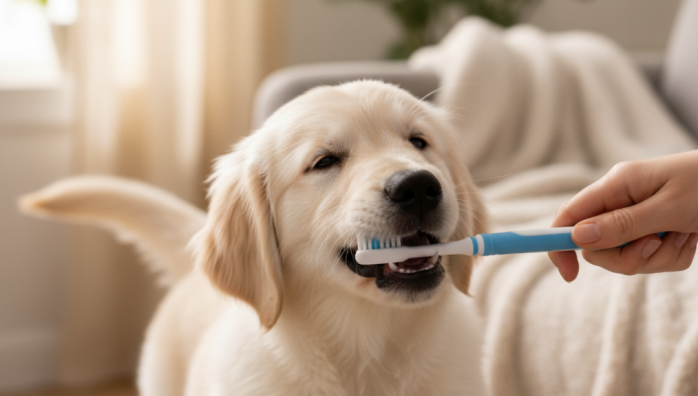
I started with a soft, silicone finger brush. I let the puppy sniff it, lick the toothpaste off it, and just get familiar with it as an object. After a few days, I moved to a very soft-bristled puppy toothbrush. The key is to let them lead; never force it into their mouth.
3. The first \'real\' brushing
The first few attempts were barely brushing. I\'d get a few gentle circular motions on the outside of the big canine and back teeth, and that was it. Then, lots of praise and a special treat. We gradually built up the duration over several weeks. Even now with my adult dogs, we don\'t stress about a perfect, deep clean every single day. Consistency is more important than intensity.
Starting this routine early has been a game-changer for me and my dogs. It avoids so much stress and potential health trouble down the road. Of course, every puppy is different, so it\'s always a great idea to chat with your vet about the best approach and products for your specific little one.