Compostable Pet Waste Disposal Options
by admin in Pet Care Basics 189 - Last Update November 27, 2025

For years, I used to grab those standard plastic poop bags without a second thought. It was just part of the routine. But the more I learned about sustainability, the more a little pang of guilt hit me with every knotted bag I tossed in the bin. I started picturing the sheer volume of plastic waste from just my one dog over his lifetime, and I knew I had to find a better way. This sent me down a rabbit hole of research into what \'eco-friendly\' really means when it comes to pet waste.
Understanding what \'compostable\' truly means
The first thing I realized is that terms like \'biodegradable\' and \'compostable\' are not interchangeable, and it\'s a distinction that really matters. Many bags labeled \'biodegradable\' or \'degradable\' are still plastic-based and are designed to break down into smaller pieces of plastic, which doesn\'t solve the pollution problem. It took me a while to learn this, but the key is to look for the word \'compostable\'.
Specifically, I learned to look for certifications. In the US, the BPI certification is a good indicator. In Europe, I look for the \'OK compost HOME\' or \'OK compost INDUSTRIAL\' logos from TÜV Austria. These certifications mean the product has been tested and will break down into natural elements in a composting environment. It was an \'aha\' moment for me, realizing that I needed to be a more discerning shopper to actually make a difference.
My journey with compostable bags and beyond
Once I knew what to look for, I started trying out different certified compostable bags. Most are made from cornstarch (PLA) and other plant-based materials. Honestly, some of the early ones I tried were flimsy and tore easily, which was frustrating. But the technology has improved so much. The ones I use now are thick, durable, and I trust them completely. The most important thing I discovered is understanding where the bag is designed to go. Some are for industrial facilities only, while others are certified for home composting.
This led me to my next big step: creating a dedicated pet waste composting system in my own backyard.
Setting up a dedicated pet waste composter
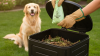
I can\'t stress this enough: you cannot and should not put pet waste into a regular garden compost pile that you use for vegetables. Pet waste can contain pathogens that are harmful to humans. This is a critical safety step I took very seriously. Instead, I set up a separate, isolated system just for my dog\'s waste. It\'s a simple process:
- Choose the right spot: I picked a corner of my yard far away from any vegetable gardens, wells, or areas where kids play.
- Use a dedicated bin: You can buy commercial pet waste digesters, or do what I did and make one from a large bucket with a lid, drilling holes in the bottom and sides before burying it about halfway in the ground.
- Balance your inputs: This is key for composting anything. For every scoop of pet waste (which is high in nitrogen), I add a scoop of a carbon source like sawdust, shredded newspaper, or dead leaves. This prevents odors and helps the decomposition process.
- Keep it slightly moist: The microbes that do all the work need water, so I check on it periodically and add a little water if it seems dry.
The resulting compost, after about a year, is something I only use on my ornamental flower beds and shrubs—never on anything we might eat. While this might sound complex, it\'s become a simple, weekly chore. Knowing I\'m turning waste into a resource and keeping hundreds of plastic bags out of the landfill each year feels incredibly rewarding.