Recyclable Pet Food Packaging
by admin in Pet Care Basics 99 - Last Update December 5, 2025
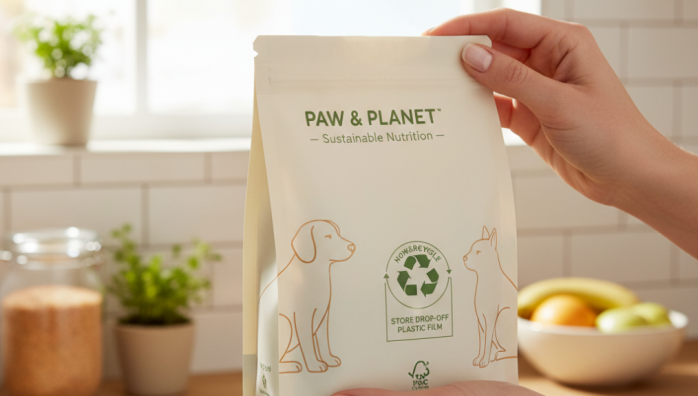
I used to feel a real pang of guilt every time I emptied a bag of kibble for my dog. I’d look at that big, shiny, crinkly bag and know exactly where it was headed: the landfill. For all my efforts with reusable shopping bags and composting, this one area of my life felt like a huge sustainability failure. It honestly bothered me for years, this mountain of non-recyclable plastic I was creating just by feeding my best friend. I knew there had to be a better way, so I decided to dig in and really understand the problem.
Why most pet food bags are a recycling nightmare
The first thing I learned is that the very features that keep our pets\' food fresh are what make the packaging so difficult to recycle. Most traditional dry food bags are made from multi-laminate materials. This means they\'re a fusion of several layers of different types of plastic, and sometimes a layer of aluminum foil, all bonded together. This structure creates an excellent barrier against oxygen, moisture, and light, which is crucial for preserving nutrients and preventing spoilage. However, recycling facilities are designed to sort and process single material types (mono-materials). They simply don\'t have the technology to separate these fused layers, so the entire bag gets rejected and sent to the landfill.
My journey to finding better options
Once I understood the \'why\', I could start looking for the \'how\'. My mission became reading the fine print on every single bag in the pet food aisle. It took some time, but I started noticing a shift. A few forward-thinking brands were moving towards mono-material packaging, usually made from #2 or #4 plastics, which are more widely recyclable. It felt like a small victory every time I found one. I also learned to look for clear and honest recycling instructions on the package itself, like the How2Recycle® label, which is becoming more common in the US. It breaks down exactly which parts of the packaging can be recycled and how.
What to look for on the label
Finding truly recyclable packaging can feel like a treasure hunt. Here’s the simple checklist I developed for myself when I\'m shopping:
- Check for a recycling symbol: Look for the classic chasing arrows symbol, often with a number inside. Bags made from #2 (HDPE) or #4 (LDPE) plastic are becoming more common and are recyclable in many areas, sometimes through store drop-off programs.
- Look for mono-material claims: Some brands will explicitly state \"Made from a single material\" or \"100% recyclable-ready\" on their packaging. This is a great sign.
- Seek out paper-based options: For some types of food and treats, you can find paper bags. Just be sure to check if they have a non-removable plastic lining, which would make them non-recyclable.
- Explore brand-specific programs: I was surprised to find that some companies have partnerships with specialized recycling services. You can mail the empty bags back to them for proper processing. It takes an extra step, but it\'s a guaranteed way to keep them out of the landfill.
Ultimately, making this switch wasn\'t about achieving zero-waste perfection overnight. It was about making one small, informed decision at a time. Choosing a recyclable bag is a simple change, but when we all do it, it makes a huge difference for the planet our pets love to play on. It\'s one more way I can show my love for my animals and the world we share.