Compostable Pet Waste Disposal Methods
by admin in Pet Care Basics 210 - Last Update December 2, 2025
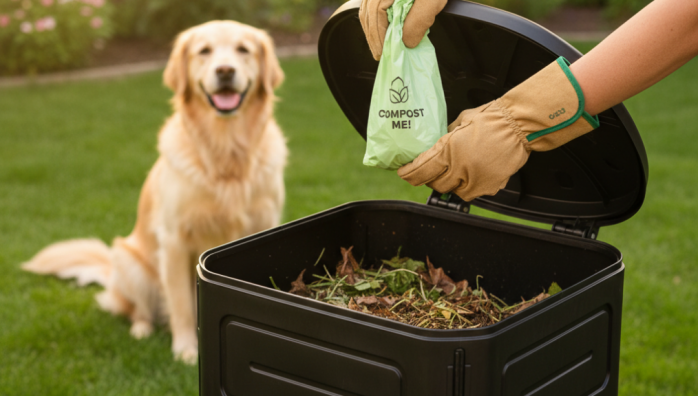
When I first adopted my rescue dog, Maya, I was prepared for the walks, the training, and the endless cuddles. What I wasn\'t prepared for was the mountain of little plastic bags that started piling up by my door and in my trash can. Each one felt like a small, non-biodegradable mark against my efforts to live a more sustainable life. I knew there had to be a better way, and that\'s what sent me down the rabbit hole of compostable pet waste disposal.
My initial concerns and the learning curve
Honestly, the idea of composting pet waste felt a little daunting, and frankly, a bit gross at first. My head was filled with questions. Is it safe? Will it smell? Can I even do this in my suburban backyard? The internet offered a lot of conflicting advice, but I was determined. The key, I learned, is understanding that composting dog or cat waste isn\'t the same as composting kitchen scraps. It requires a different process and a healthy respect for hygiene.
The main concern is the potential for pathogens—like E. coli, salmonella, and roundworm eggs—that can be present in pet feces. A regular, cool compost pile won\'t get hot enough to kill them. This was my first major \'aha\' moment: I needed a dedicated system that could achieve and maintain high temperatures (a process known as hot composting) to make the end product safe to handle.
Exploring different composting methods
Once I understood the safety basics, I started exploring practical methods. It wasn\'t a one-size-fits-all solution, and what works for me might need tweaking for someone else, but these are the avenues I found most effective.
The dedicated in-ground digester
This was the first method I tried. It\'s essentially a bucket-like system with holes that you bury in your yard, leaving only the lid exposed. You add the waste, a sprinkle of carbon material like sawdust or brown leaves, and special enzymes or \'digester\' powder. The waste breaks down underground, slowly leaching into the surrounding soil. It\'s low-maintenance, but it\'s crucial to place it away from any vegetable gardens, wells, or waterways. I found this to be a great \'set it and forget it\' option for my dog\'s waste.
Hot composting in a tumbler
For those who want to create usable compost for ornamental plants, a hot composting tumbler is a fantastic choice. These are enclosed bins you can turn to aerate the contents. The trick is getting the right ratio of \'greens\' (the pet waste) to \'browns\' (carbon sources like shredded cardboard or wood pellets). I learned to be diligent about monitoring the temperature with a compost thermometer, aiming for a consistent 140-160°F (about 60-70°C). It\'s more hands-on, but the reward of rich, safe compost for my flower beds felt incredible. Remember, this is just my experience, and it\'s always wise to consult local agricultural extension resources for best practices in your area.
What about compostable bags?
I quickly realized that not all \'green\' bags are created equal. Many bags labeled \'biodegradable\' just break down into smaller microplastics. The key is to look for bags that are certified \'compostable,\' preferably for home composting. These are designed to break down completely into organic matter. They have been a game-changer for collecting waste on walks before adding it to my composter.
Making the switch to composting pet waste has been a journey, but it has dramatically reduced my household\'s plastic waste. It feels good knowing I\'m closing the loop and taking another small step to lessen my carbon pawprint, one scoop at a time.