Basic Wound Care for Pet Injuries
by admin in Pet Care Basics 241 - Last Update December 1, 2025
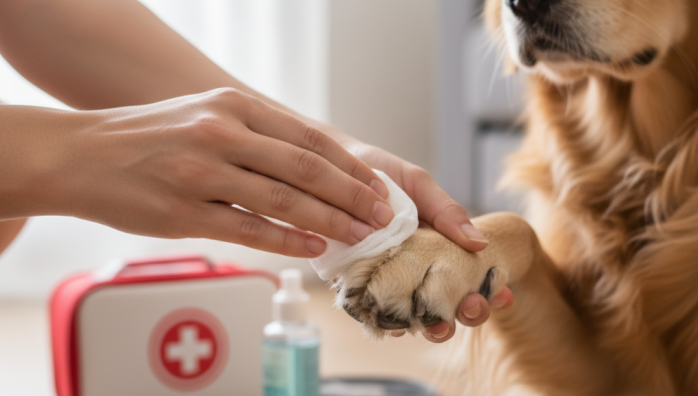
I\'ll never forget the panic I felt the first time my dog came back from a run in the woods with a bleeding paw. My mind went blank for a second. It\'s a feeling I think many pet owners can relate to. Over the years, I\'ve learned that being prepared isn\'t just about having a first-aid kit; it\'s about having a calm, clear plan. Knowing the basic steps for wound care has given me the confidence to handle minor scrapes and cuts without panicking, and to know exactly when a situation is serious enough for an immediate vet visit.
My first response to a pet injury
Before I even touch the wound, my first step is always to assess the situation and my pet\'s demeanor. An injured animal is often a scared animal, and they can lash out in pain. I always approach slowly and speak in a calm, soothing voice. If my pet seems overly anxious or aggressive, I\'ll use a muzzle for my own safety and their comfort. It\'s a precaution I\'ve learned is better to have and not need. Remember, your calm energy can significantly influence your pet\'s stress levels.
Stopping minor bleeding
For small cuts or scrapes, the goal is to stop the bleeding first. I grab a clean cloth or a piece of sterile gauze from my pet first-aid kit and apply firm, steady pressure directly to the wound. It usually takes a few minutes. It’s tempting to peek every 30 seconds, but I’ve learned that maintaining constant pressure is key. If the bleeding is severe or doesn\'t stop after 5-10 minutes of pressure, I know that\'s a clear sign to stop what I\'m doing and head straight to the emergency vet.
Cleaning the wound properly
Once any minor bleeding is controlled, the next step is cleaning. I\'ve learned the hard way that you should *not* use harsh antiseptics like hydrogen peroxide or alcohol, as they can damage the tissue and delay healing. My go-to method is to flush the wound with a sterile saline solution or clean, lukewarm water. I use a syringe (without the needle, of course) from my kit to gently squirt the saline over the area to wash away any dirt or debris. I try to be as gentle as possible during this process. For anything deeply embedded in the wound, I never try to remove it myself—that\'s a job for a professional.
When to call the veterinarian
This is probably the most important lesson I\'ve learned: know your limits. Basic first aid is a temporary measure to stabilize your pet and prevent further harm until you can get professional medical care. I always call my vet for guidance, but I head there immediately if the wound is:
- Deep, gaping, or a puncture wound (especially from a bite).
- Bleeding uncontrollably.
- Has an object embedded in it.
- Shows any signs of infection like swelling, pus, or a foul odor.
- Located on a sensitive area like the eye.
My philosophy is simple: when in doubt, get it checked out. A quick vet visit provides peace of mind and ensures my furry friend gets the best care possible. This is just my experience, and I always recommend you consult with your own veterinarian for advice tailored to your pet\'s health.