Balancing Nutrients in Beginner Raw Diets
by admin in Pet Care Basics 126 - Last Update November 29, 2025
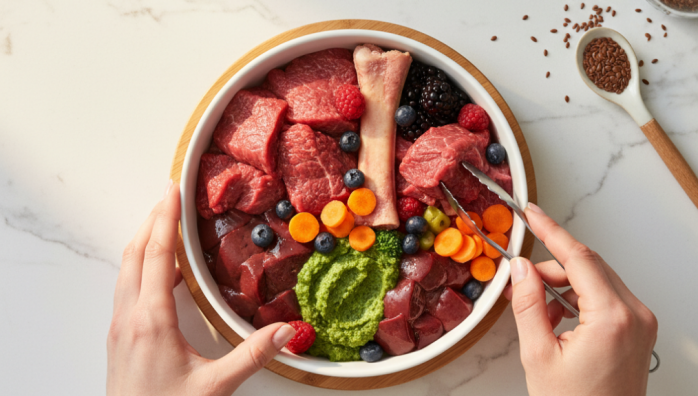
When I first decided to switch my dog to a raw diet, I was both excited and terrified. I\'d read about the glossy coats and boundless energy, but the fear of \'getting it wrong\' was paralyzing. My biggest worry? Nutrient balance. It felt like a high-stakes chemistry experiment where my best friend\'s health was on the line. Honestly, it took me a lot of trial, error, and late-night reading to finally feel confident, and I want to share what I learned on that journey.
The 80/10/10 rule is a starting point, not the destination
Most beginners, myself included, start with the classic BARF (Biologically Appropriate Raw Food) ratio: 80% muscle meat, 10% edible bone, and 10% organ meat. This is a fantastic foundation, but I quickly realized it was more of a guideline than a gospel. My \'aha\' moment came when I understood that balance isn\'t achieved in a single meal, but over time—much like our own diets.
Why variety within the ratios is key
For the first month, I meticulously weighed out chicken muscle meat, chicken bones, and chicken liver. It fit the ratio perfectly, but something was missing. My dog was doing okay, but not thriving. The real magic happened when I started rotating proteins. One week we\'d have beef, the next lamb, then maybe some fish. Each protein offers a different profile of amino acids and fats. This simple change made a huge difference in his coat and vitality.
My big mistake with organ meats
I also made the classic rookie mistake of thinking \'organ meat\' just meant liver. Liver is a nutrient powerhouse, but it\'s very high in Vitamin A and shouldn\'t be the *only* organ you feed. I learned that to achieve true balance, I needed to include other secreting organs like kidney, spleen, and pancreas. I now aim for liver to be about half of the 10% organ portion, with other organs making up the rest. This provides a much wider, safer spectrum of vitamins and minerals.
Going beyond the basics for a complete diet
After I nailed the protein rotation and organ variety, I started looking at the finer details. A truly balanced diet, I believe, mimics what an animal would eat in the wild, and that includes more than just muscle, bone, and organ.
Don\'t forget the omegas
I noticed my dog\'s skin was a bit dry, especially in the winter. Adding in sources of omega-3 fatty acids was a game-changer. I now include oily fish like sardines or mackerel (packed in water, no salt) a couple of times a week. This simple addition has done wonders for his skin and coat.
A note on supplements and \'extras\'
It\'s so tempting to buy every supplement on the shelf, but I\'ve learned that whole food sources are almost always better. Instead of a synthetic fiber supplement, I might add a spoonful of plain pumpkin purée. For antioxidants, a tiny bit of puréed leafy greens. Of course, this is just what has worked for my dog. I always recommend chatting with your vet or a certified canine nutritionist before adding new things, as every animal has unique needs and you want to avoid unbalancing their diet.
Ultimately, balancing a raw diet is a journey of learning and observation. Start with the basic ratios, focus on variety over time, and pay close attention to how your pet looks and feels. It becomes second nature faster than you think.