Ramp Selection for Senior Pets
by admin in Pet Care Basics 130 - Last Update December 4, 2025
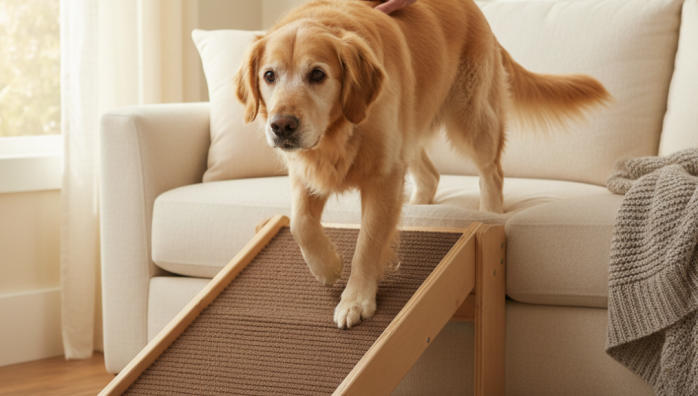
I remember the exact moment I knew we needed a change. My old chocolate lab, Sam, stood at the edge of the bed, whimpering. The jump he used to make effortlessly was now a mountain he couldn\'t climb. It\'s a heartbreaking milestone for any pet owner, and it sent me down the rabbit hole of mobility aids. My first purchase was a cheap, flimsy plastic ramp. It slid on the floor, and he was terrified of it. It was a complete waste of money and, more importantly, it eroded his confidence. That\'s when I realized that choosing a ramp isn\'t just about convenience; it\'s about giving our aging friends back their dignity and freedom safely.
What I learned about ramp surfaces the hard way
The single most important factor, in my experience, is the surface. That first ramp I bought had these little plastic ridges that I thought would be fine for grip. I was wrong. On a slightly bad day, Sam’s paw slipped, and he refused to go near it again. Now, I only consider ramps with a high-traction surface. Think of it like sandpaper, a rubberized coating, or a dense, low-pile carpet. It has to give your pet a secure footing, even on an incline. A confident step is everything for a pet who is already feeling vulnerable.
Finding the right incline and length
This is basic physics, but it\'s easy to overlook. The shorter the ramp, the steeper the climb. For a senior pet, especially one with arthritis or hip dysplasia, a steep incline is painful and dangerous. My rule of thumb is to buy the longest ramp that is practical for your space. For getting into a car or onto a high bed, you\'ll want a longer, more gently sloped ramp. For a low sofa, a shorter one might be fine. Before buying, I measure the height of the furniture or vehicle and check the manufacturer\'s recommendation for the ramp length needed to achieve a gentle, safe slope.
Other key features I won\'t compromise on
- Width and Side Rails: A narrow ramp can make a pet feel insecure, as if they\'re walking on a balance beam. I look for a wider platform and, ideally, raised side rails. These act as a visual and physical guide, which was a game-changer for my dog\'s willingness to use it.
- Stability and Weight Capacity: The ramp must be rock-solid. It shouldn\'t wobble or flex under your pet\'s weight. Always check the weight capacity and make sure it\'s well above your pet\'s actual weight. The connection point, where it rests on the furniture or car, should also have a non-slip surface to prevent it from shifting.
- Portability and Storage: A heavy, cumbersome ramp that\'s difficult to set up is one you\'ll avoid using. I found that telescoping or folding ramps are fantastic. They are easy to store in a closet or the back of the car, but it\'s crucial to ensure the locking mechanism is strong and secure when it\'s extended.
A note on training and patience
Don\'t expect your pet to start using the ramp immediately. I laid ours flat on the floor for a few days, letting Sam sniff it and walk across it. I\'d sprinkle his favorite treats on it to create a positive association. We then practiced with a very low incline, gradually increasing it over a week. Every session was short, happy, and ended on a good note. Patience is everything. Remember, this is a new and strange object for them. Your calm confidence will help them feel secure.
Choosing the right ramp genuinely improved the quality of Sam\'s last years with us. It gave him back access to his favorite snoozing spots and made vet trips less stressful. While this is based on my own experience, every pet\'s needs are unique. I always recommend having a quick chat with your veterinarian to discuss the best mobility solutions for your pet\'s specific health condition.