Indoor Play for High-Energy Apartment Dogs
by admin in Pet Care Basics 121 - Last Update November 28, 2025
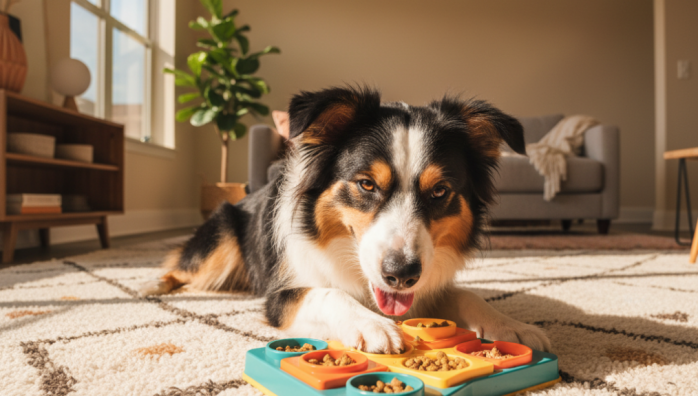
When I first moved into a city apartment with my Border Collie mix, Leo, I was filled with a low-grade panic. How could I possibly provide enough stimulation for a dog bred to run for miles, all within 800 square feet? The guilt was real. I\'d watch him pace, a ball in his mouth, and feel like I was failing him. It took time, a lot of trial and error, and a shift in my mindset to realize that a happy apartment dog isn\'t just about physical exercise; it\'s about engaging their brilliant minds.
Tiring out the brain, not just the body
The single biggest breakthrough for Leo and me was understanding that 15 minutes of focused brain work can be more exhausting for a dog than a 30-minute run. High-energy breeds are often incredibly intelligent, and if their minds are bored, no amount of physical activity will settle them. It’s like us scrolling on our phones when we feel restless – we need engagement, not just movement.
The magic of scent work
I started with something simple: a \'find the treat\' game. I\'d have Leo stay in one room while I hid a few high-value, smelly treats around the living room. At first, they were easy to find, but as he got better, I started hiding them under rugs, behind pillows, and inside cardboard boxes. Watching him use his nose, totally absorbed in his \'work,\' was incredible. It\'s a calm, focused activity that uses their natural instincts and leaves them feeling satisfied and sleepy.
Puzzle toys are a lifesaver
I\'ve built up a small collection of puzzle toys that I rotate to keep things fresh. Snuffle mats that mimic foraging in grass, treat-dispensing balls that he has to roll around, and more complex slider puzzles have all become part of our daily routine. I often feed him his entire breakfast using these tools. It turns a two-minute meal into a 20-minute problem-solving session.
Creating structured indoor physical play
Of course, they still need to move their bodies. The key in a small space is structure. Uncontrolled roughhousing is a recipe for broken lamps and disgruntled downstairs neighbors. Instead, we focus on games with clear rules and boundaries.
Tug-of-war: the right way
I was initially hesitant about tug, worried it would encourage aggression. But after talking with a trainer, I learned it\'s a fantastic cooperative game when done correctly. We have a designated tug toy, and the rules are simple: the game stops immediately if his teeth ever touch my hand, and he must release the toy on my \'drop it\' command. It\'s a great way to burn energy and reinforce his training at the same time.
Indoor fetch and flirt poles
A soft, indoor-friendly ball or toy is essential. We play short games of fetch down a hallway. To make it more challenging, I\'ll ask for a \'sit\' or \'down\' before each throw. A flirt pole (like a giant cat toy for dogs) is also amazing for small spaces, as it allows them to chase and pounce without needing a huge running start. Just remember, these high-arousal games should always be followed by a calming activity to help them settle. This is just what has worked for us, and I always recommend chatting with your vet or a certified professional trainer before starting a new exercise routine with your dog.